











• TRUSTED RESEARCH

    TRUSTED RESEARCH | STRATEGIC INSIGHT

    SMB. CORE MIDMARKET. UPPER MIDMARKET. ECOSYSTEM
    LEARN MORE
  • BUYER JOURNEY

    BUYER JOURNEY

    SMB & Midmarket Buyers Journey Research
    LEARN MORE
  • BUYER PERSONAS

    BUYER PERSONAS

    SMB & Midmarket Technology Buyer Persona Research
    LEARN MORE
  • ARTIFICIAL INTELLIGENCE

    ARTIFICIAL INTELLIGENCE

    SMB & Midmarket Analytics & Artificial Intelligence Adoption
    LEARN MORE
  • DATACENTER SOLUTIONS

    DATACENTER SOLUTIONS

    SMB & Midmarket Datacenter Solution Adoption Trends
    LEARN MORE
  • INTERWORK 2.0: THE AGENTIC FUTURE OF CONNECTED BUSINESS

    INTERWORK 2.0: THE AGENTIC FUTURE OF CONNECTED BUSINESS

  • 2026 TOP 10 SMB BUSINESS ISSUES, IT PRIORITIES, IT CHALLENGES

    2026 TOP 10 SMB BUSINESS ISSUES, IT PRIORITIES, IT CHALLENGES

  • 2026 TOP 10 SMB PREDICTIONS

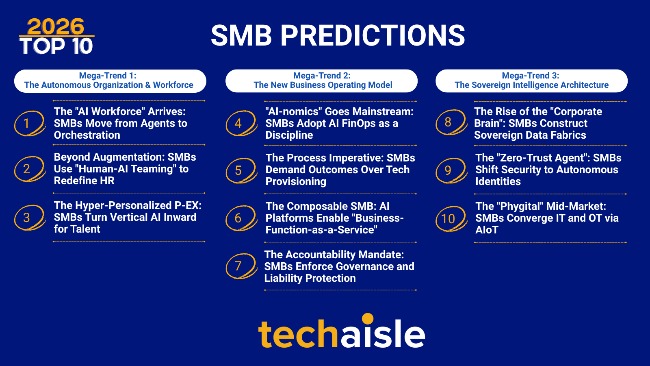
    2026 TOP 10 SMB PREDICTIONS

    SMB & Midmarket: Autonomous Business
    READ
  • 2026 TOP 10 PARTNER PREDICTIONS

    2026 TOP 10 PARTNER PREDICTIONS

    Partner & Ecosystem: Next Horizon
    READ
  • IT SECURITY TRENDS

    IT SECURITY TRENDS

    SMB & Midmarket Security Adoption Trends
    LATEST RESEARCH
  • PARTNER ECOSYSTEM

    PARTNER ECOSYSTEM

    Global Channel Partner Trends
    LATEST RESEARCH

Techaisle Analyst Insights

Trusted research and strategic insight decoding SMBs, the Midmarket, and the Partner Ecosystem.
Anurag Agrawal

Beyond the Network: Cisco’s Pivot to Distributed AI Orchestrator

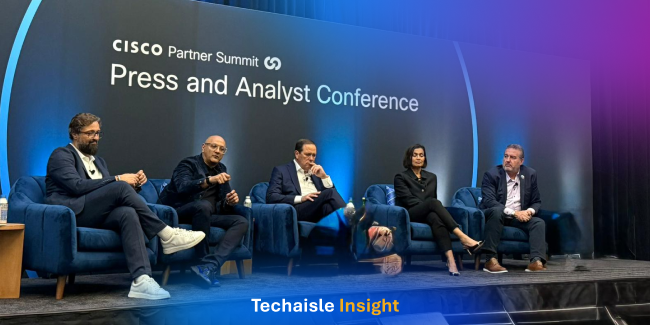
At its recent Partner Summit, Cisco’s executive team, led by CPO Jeetu Patel, made a declaration that was as bold as it was inevitable: "Cisco is the critical infrastructure company for the AI era." For an organization built on connecting the internet, this is a profound pivot. However, according to my analysis, even this claim is too modest. Cisco is not just building infrastructure; it is building the integrated stack to simplify and secure customer deployments. A more accurate title is the "Distributed AI Infrastructure Orchestrator." This pivot to orchestration is not one Cisco can make alone. It is a co-dependent strategy built to capture a once-in-a-generation install base refresh—an opportunity CEO Chuck Robbins pegged at $40 billion for Cisco. From my Techaisle analysis, Cisco's blueprint for capturing this opportunity rests on three interdependent pillars:

  1. A Reframed Platform Strategy: Solving the core-to-edge infrastructure and data barriers to AI.
  2. A Comprehensive Security Doctrine: Weaving trust into the fabric of the network as a prerequisite for AI adoption.
  3. A Modernized Economic Engine: The new Cisco 360 Partner Program is designed to shift partner business models from resale to high-value lifecycle services.

Cisco PArner Summit 650

1. Reframing the Platform: Beyond "AI Infrastructure"

Jeetu Patel’s claim is the new north star, but I believe "critical infrastructure for the AI era" is too modest a description. It fails to capture the scale of Cisco’s ambition. Cisco’s strategy is designed to address what it identifies as the three fundamental "impediments" holding back AI: infrastructure constraints, a trust deficit, and a data gap.

Anurag Agrawal

Architecting the Future-Ready Midmarket: Lenovo's New Playbook for IT Modernization and AI

The global midmarket is a tricky beast. It possesses the ambition and complexity of a large enterprise but often operates with the resource constraints of a small business. For years, Techaisle has maintained that the midmarket is the true battleground for technology growth, urging vendors to address its unique needs. In 2025, it seems that the call has been answered.

These organizations are the engine of economic growth. In fact, Techaisle data reveals this segment is a hotbed of high-growth businesses. Within the upper midmarket (1000-4999 employees), a remarkable 67% of firms are classified as high-growth, projecting an average revenue increase of 7.4% for the coming year. This trend continues in the core midmarket (100-999 employees), where 57% of firms are on a high-growth trajectory, anticipating revenue growth of 6.2%.

Yet, this very growth creates a constant tug-of-war between the need to modernize and the practical limitations of budget, time, and in-house IT expertise. According to Techaisle research, 78% of midmarket firms identify IT complexity as a significant obstacle to digital transformation, and 59% cite a lack of specialized skills as the primary barrier to adopting new technologies like AI. It is precisely this market reality that Lenovo is targeting with its latest suite of flexible solutions for SMBs and midmarket businesses.

Lenovo's announcement is not merely a product refresh; it is a strategic, cohesive, and channel-centric approach designed to de-risk technology adoption and accelerate time-to-value for the midmarket. The strategy is built on three interconnected pillars: simplified, pre-validated Business Solutions in a Box; accessible, outcome-focused AI Solutions; and flexible, intelligent Services & Platforms. This analysis will deconstruct these announcements to explore why they are differentiated and why they matter deeply to midmarket businesses and the channel partners who serve them.

The "In-a-Box" Approach – Building the Foundation for Growth

For SMBs and midmarket firms, unstable IT is like a cracked foundation—nothing innovative or ambitious can be built upon it. Yet, for years, midmarket IT teams have been forced to act as systems integrators, painstakingly assembling servers, storage, networking, and software into functional solutions. This process is time-consuming, fraught with risk, and diverts scarce IT resources from value-added projects. Lenovo’s "in-a-box" concept directly attacks this foundational pain point.

techaisle lenovo midmarket smb 650

Anurag Agrawal

Great Cybersecurity Paradox: Why Skyrocketing SMB Spending Isn't Translating to Readiness

SMBs are caught in a paradoxical cycle. While security solution adoption is poised for explosive growth, fundamental readiness remains dangerously low. The problem is not a lack of tools, but a critical deficit in process, expertise, and operational maturity.

Our latest Techaisle research into the SMB and midmarket security landscape has unearthed a troubling paradox. On one hand, the data forecasts explosive growth in the adoption of security solutions, with categories like Network Detection & Response and Managed Detection & Response (MDR) set to grow by 118% and 107%, respectively. Yet, this rush to acquire technology stands in stark contrast to the segment’s profound lack of foundational preparedness, creating a dangerous gap between investment and actual security posture.

This is not a minor oversight; it is a gaping vulnerability that technology alone cannot patch. A staggering 83% of SMBs conduct no formal security awareness training, and 46% have no established security protocol to follow in the event of an incident. The consequences are severe, with the average financial loss from a security incident for an SMB now standing at $1.6 million. This figure is a clear indictment of a reactive, tool-centric approach.

The issue is not a failure of technology itself, but a failure of operationalization. SMBs are buying the hardware and software but critically lack the frameworks and human capital to wield them effectively. With 51% admitting they have no formal risk frameworks, it is evident they are navigating a complex and hostile threat landscape without a map.

techaisle great cybersecurity paradox 650px

Deconstructing the Readiness Gap

The core of this paradox lies in three interconnected areas where SMB perception and reality diverge sharply:

Anurag Agrawal

Techaisle Research: SMBs Validate Cisco's AI Strategy for Real-World Challenges

Techaisle's in-depth interviews with Cisco's SMB customers reveal a deep commitment from the vendor to solving their unique business challenges through its AI-powered offerings. Direct feedback from SMB customers, gathered through Techaisle's extensive interviews, confirms that Cisco's AI solutions are resonating precisely because they target the specific operational challenges these businesses face. SMBs are increasingly recognizing AI's potential, with many already having AI projects in the trial/pilot phase, and 92% expected to use AI by the end of 2025. A remarkable 75% of firms believe delaying AI adoption would lead to missed opportunities. Despite this positive outlook, many SMBs struggle with how to begin their AI adoption journey. The path is often fraught with numerous challenges, ranging from a lack of internal expertise and budgetary constraints to technical hurdles like reliance on legacy systems, limited network bandwidth, or data restrictions. Softer challenges, such as resistance to change or the absence of a clear strategy, can also impede effective AI adoption, sometimes leading to "checkbox solutions" that fail to meet real business needs.

techaisle cisco smb blog

Cisco’s Strategic Approach: Overcoming SMB Challenges with Tailored AI Innovations

Cisco deeply understands the unique needs of SMBs. Cisco’s AI-powered ecosystems are specifically designed to help SMBs unlock significant value without the burden of complex, stand-alone systems, addressing pressing challenges like limited resources, skills gaps, and operational inefficiencies. Let me first outline how Cisco’s approach to AI helps SMBs mitigate common adoption hurdles:

Tags:

Trusted Research | Strategic Insight

Techaisle - TA