









• TRUSTED RESEARCH

    TRUSTED RESEARCH | STRATEGIC INSIGHT

    SMB. CORE MIDMARKET. UPPER MIDMARKET. ECOSYSTEM
    LEARN MORE
  • BUYER JOURNEY

    BUYER JOURNEY

    SMB & Midmarket Buyers Journey Research
    LEARN MORE
  • BUYER PERSONAS

    BUYER PERSONAS

    SMB & Midmarket Technology Buyer Persona Research
    LEARN MORE
  • ARTIFICIAL INTELLIGENCE

    ARTIFICIAL INTELLIGENCE

    SMB & Midmarket Analytics & Artificial Intelligence Adoption
    LEARN MORE
  • DATACENTER SOLUTIONS

    DATACENTER SOLUTIONS

    SMB & Midmarket Datacenter Solution Adoption Trends
    LEARN MORE
  • INTERWORK 2.0: THE AGENTIC FUTURE OF CONNECTED BUSINESS

    INTERWORK 2.0: THE AGENTIC FUTURE OF CONNECTED BUSINESS

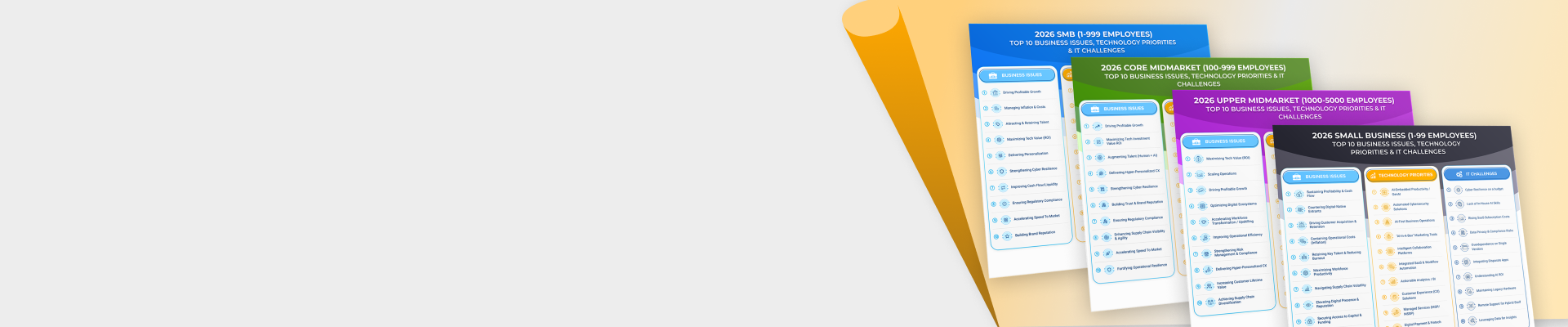
  • 2026 TOP 10 SMB BUSINESS ISSUES, IT PRIORITIES, IT CHALLENGES

    2026 TOP 10 SMB BUSINESS ISSUES, IT PRIORITIES, IT CHALLENGES

  • 2026 TOP 10 SMB PREDICTIONS

    2026 TOP 10 SMB PREDICTIONS

    SMB & Midmarket: Autonomous Business
    READ
  • 2026 TOP 10 PARTNER PREDICTIONS

    2026 TOP 10 PARTNER PREDICTIONS

    Partner & Ecosystem: Next Horizon
    READ
  • IT SECURITY TRENDS

    IT SECURITY TRENDS

    SMB & Midmarket Security Adoption Trends
    LATEST RESEARCH
  • PARTNER ECOSYSTEM

    PARTNER ECOSYSTEM

    Global Channel Partner Trends
    LATEST RESEARCH

Techaisle Analyst Insights

Trusted research and strategic insight decoding SMBs, the Midmarket, and the Partner Ecosystem.
Anurag Agrawal

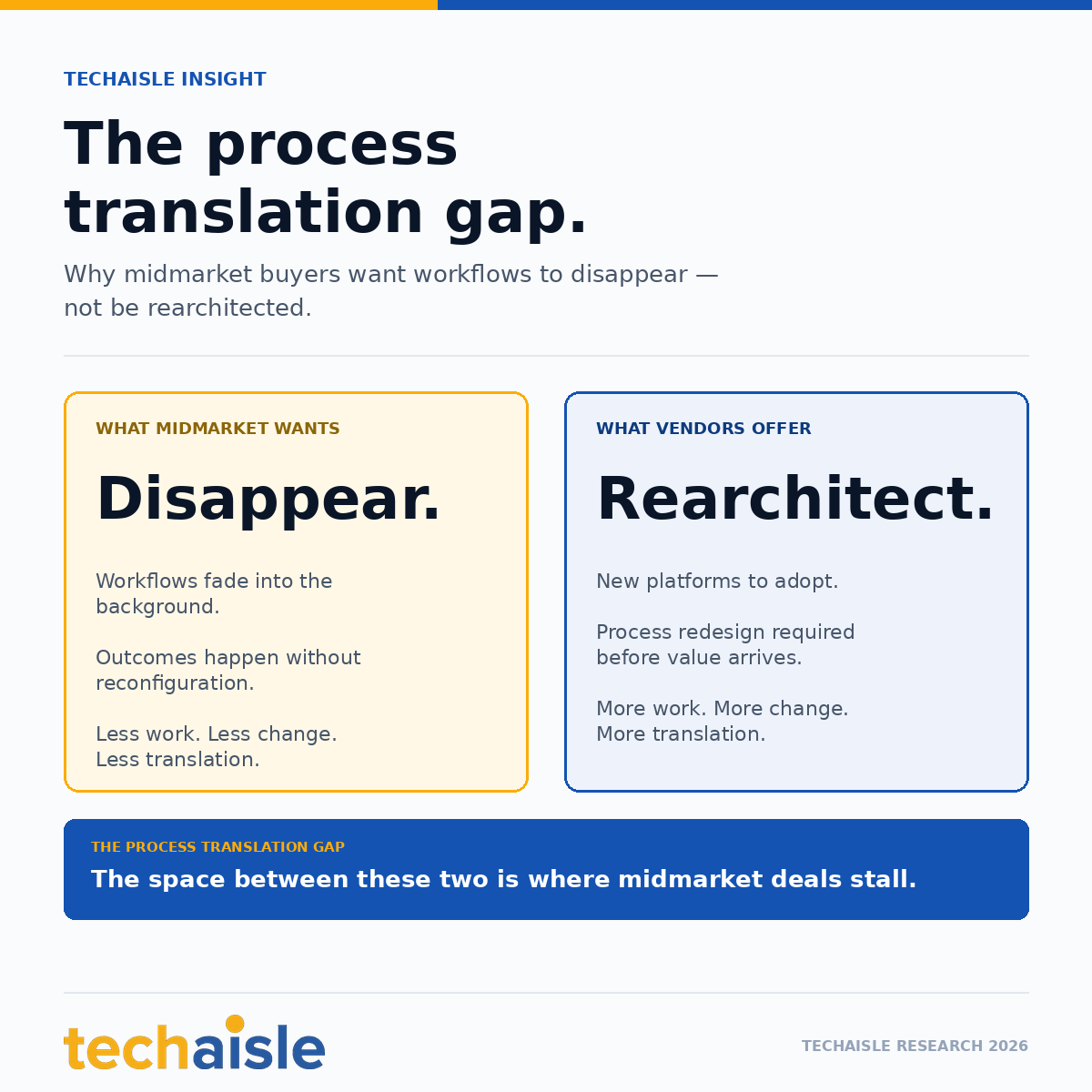
The Process Translation Gap: Why Midmarket Buyers Want Workflows to Disappear, Not Be Rearchitected

The vendor sales pitch most midmarket buyers are hearing right now is the wrong pitch.

Almost every agentic AI conversation in the market today is framed around process improvement - automate the workflow, accelerate the handoffs, reduce the cycle time. It is a coherent story. It is also misreading the buyer. Techaisle's research shows midmarket firms are not asking vendors to make their processes faster, smoother, or more integrated. They are asking for the process to disappear entirely.

That distinction is not semantic. It governs which vendors win the next budget cycle and which ones get politely thanked and shown the door.

techaisle process translation gap

The data the market keeps misreading

The clearest evidence of the gap shows up in Techaisle's GenAI adoption study of SMBs. 76% report that GenAI has accelerated employee task completion. Only 15% report improved business processes. 

The standard reading of that data - and I see it in vendor decks every week - is that GenAI is "still maturing" and that process improvement will catch up as adoption deepens. That reading is wrong. The gap between 76 and 15 is not a maturity lag. It is a category error. GenAI made individual employees faster at executing the same processes they had before. That was never what midmarket buyers actually wanted. They wanted fewer processes to execute. The technology delivered on the wrong promise, and the data is the receipt.

I have started calling the space between those two numbers the process translation gap. It is the difference between making a worker faster at sending an invoice-approval email and questioning whether the approval email needs to exist in the first place. Almost no vendor in the market is positioned to bridge it. Almost every midmarket buyer is now looking for one who can.

Why "rearchitecture" is also the wrong word

Anurag Agrawal

144 AI Agents Per Human Employee: The Midmarket Ratio Nobody's Pricing In Yet

The leading edge of the SMB and midmarket has crossed a threshold that the rest of the industry has not caught up to.

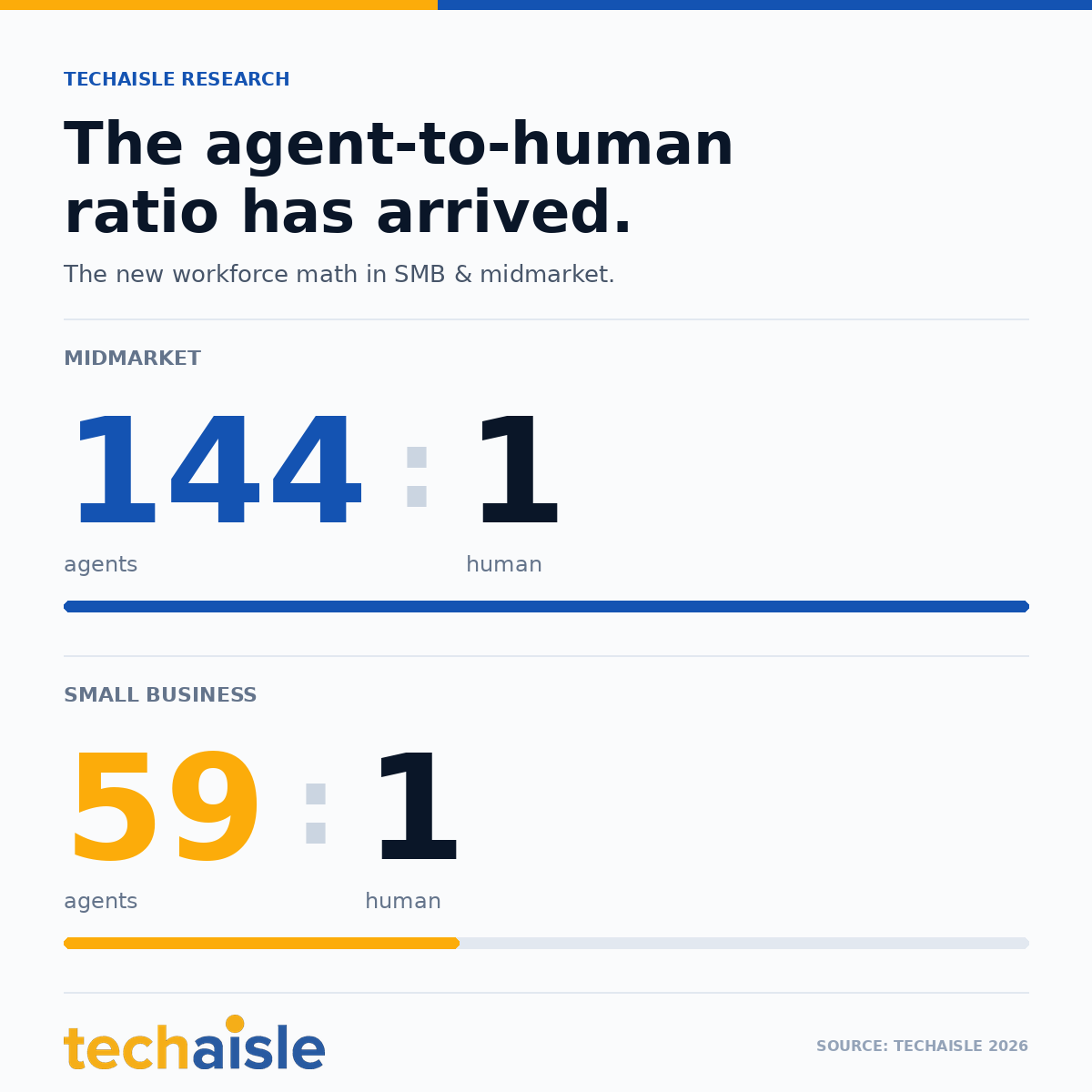
In midmarket organizations that have moved past packaged GenAI features and stood up custom agentic ecosystems, Techaisle research shows 144 AI agents deployed for every human employee. In small businesses, the ratio is 59:1. The finding comes from Techaisle's 2026 SMB and midmarket primary research, focused specifically on organizations that have architected past the SaaS interface and into agent orchestration. These are not pilots, and these are not projections. This is what is running in production today in the companies that crossed the line first.

techaisle agent to human ratio

I want to be careful about what these numbers mean and what they do not. They do not describe the average SMB - most are still wrestling with pilot purgatory and the Activation Void between intent and outcome. They describe the leading edge. But the leading edge is where vendor and channel strategy gets decided over the next two years, because that is where revenue migrates first. Vendors and partners who don't price this shift into their roadmaps now will be selling to a buyer whose architecture has already moved on.

Why the count gets this large

The instinct, looking at 144:1, is that the number must be inflated. It is not, but it requires understanding what counts as an agent.

Tags:
Anurag Agrawal

Red Hat Architecting the Agentic AI Nervous System

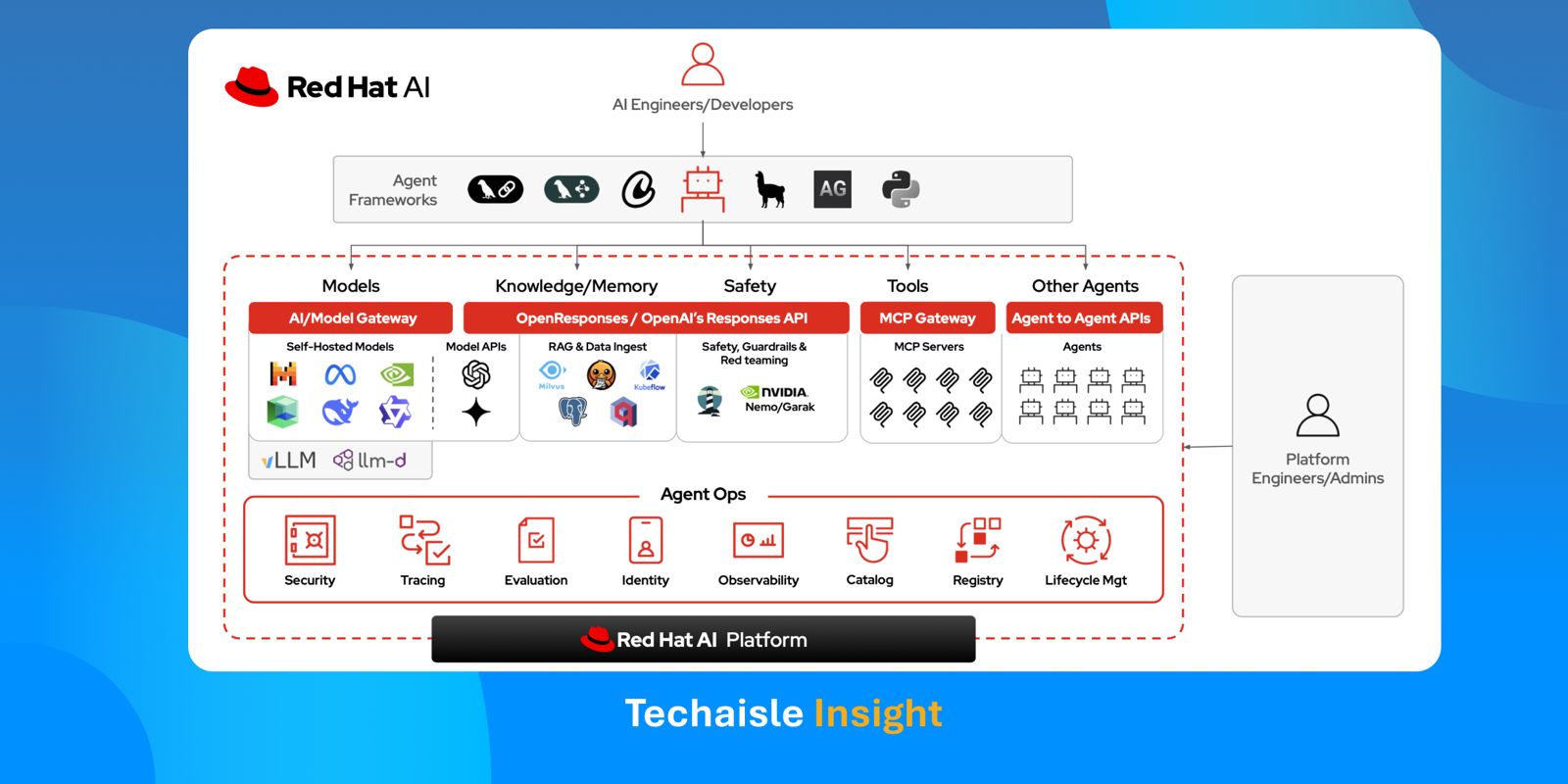
Red Hat is fundamentally rewiring the way enterprise and midmarket organizations deploy Agentic AI. Rather than joining the crowded, highly commoditized race to build the smartest foundation model or the most clever standalone agent, Red Hat is aggressively architecting the underlying "metal-to-agent" infrastructure to deploy and manage agents across a hybrid cloud environment. It is actively building the secure, governed, and predictable execution environment necessary to move AI from experimental sandboxes to production hybrid clouds. By refusing to engage in the volatile framework wars - declaring strict agnosticism about whether a customer builds an agent using OpenAI-compatible APIs or customized open-source models - Red Hat positions itself as the universal enabler. It is providing the fundamental API foundation, the deployment mechanisms, and the non-negotiable operational guardrails required to run any agent in a production environment.

techaisle redhat agentic ai

The Era of Constrained Autonomy

This pragmatic infrastructure play arrives exactly as the business artificial intelligence narrative faces a massive reality check. The market is moving past the conversational parlor tricks of LLMs and rapidly entering the era of Agentic AI. However, as the focus shifts toward systems capable of reasoning, multi-step planning, and independent execution, businesses are slamming into a formidable wall of operational and compliance risk. It is one thing for an AI model to draft an email; it is an entirely different risk paradigm for an autonomous agent to access production databases, negotiate with other microservices, and independently execute infrastructure configuration changes. Unconstrained AI autonomy, lacking accountability and auditability, is not an asset; it is a critical operational liability. The winning narrative for the next 12 to 18 months hinges on what I call "constrained autonomy" - a concept Red Hat completely aligns with, building its strategy around the principles of being "autonomous with responsibility" and "autonomous with safety".

Anurag Agrawal

Zoho’s Quiet Ascent: Solving the Midmarket’s Valley of Death

The narrative that Zoho is merely a launchpad for startups is not just outdated; it is analytically lazy. For years, I have watched the company systematically lay the foundation for something far more ambitious than just serving the SMB. We are not witnessing a sudden pivot triggered by a press release or a quarterly update. Instead, we are seeing the fruition of a decade-long, deliberate architectural strategy. Zoho has been quietly building the scaffolding for scale, ensuring that when a business outgrows its startup roots, it does not have to uproot its digital operating system. The news here is not a specific feature launch; it is the realization that Zoho has effectively closed the capability gap that once forced growing firms to migrate to bloated legacy enterprise systems. Techaisle’s latest research confirms exactly why this matters: 71% of upper midmarket firms cite "Scaling Operations" as a top business issue, yet they are often held back by "Legacy Modernization Paralysis," which they rank as a top-4 IT challenge. Zoho built a landing zone for these midmarket firms—a place where complexity is managed, not punished.

techaisle zoho midmarket

Trusted Research | Strategic Insight

Techaisle - TA