










• TRUSTED RESEARCH

    TRUSTED RESEARCH | STRATEGIC INSIGHT

    SMB. CORE MIDMARKET. UPPER MIDMARKET. ECOSYSTEM
    LEARN MORE
  • BUYER JOURNEY

    BUYER JOURNEY

    SMB & Midmarket Buyers Journey Research
    LEARN MORE
  • BUYER PERSONAS

    BUYER PERSONAS

    SMB & Midmarket Technology Buyer Persona Research
    LEARN MORE
  • ARTIFICIAL INTELLIGENCE

    ARTIFICIAL INTELLIGENCE

    SMB & Midmarket Analytics & Artificial Intelligence Adoption
    LEARN MORE
  • DATACENTER SOLUTIONS

    DATACENTER SOLUTIONS

    SMB & Midmarket Datacenter Solution Adoption Trends
    LEARN MORE
  • INTERWORK 2.0: THE AGENTIC FUTURE OF CONNECTED BUSINESS

    INTERWORK 2.0: THE AGENTIC FUTURE OF CONNECTED BUSINESS

  • 2026 TOP 10 SMB BUSINESS ISSUES, IT PRIORITIES, IT CHALLENGES

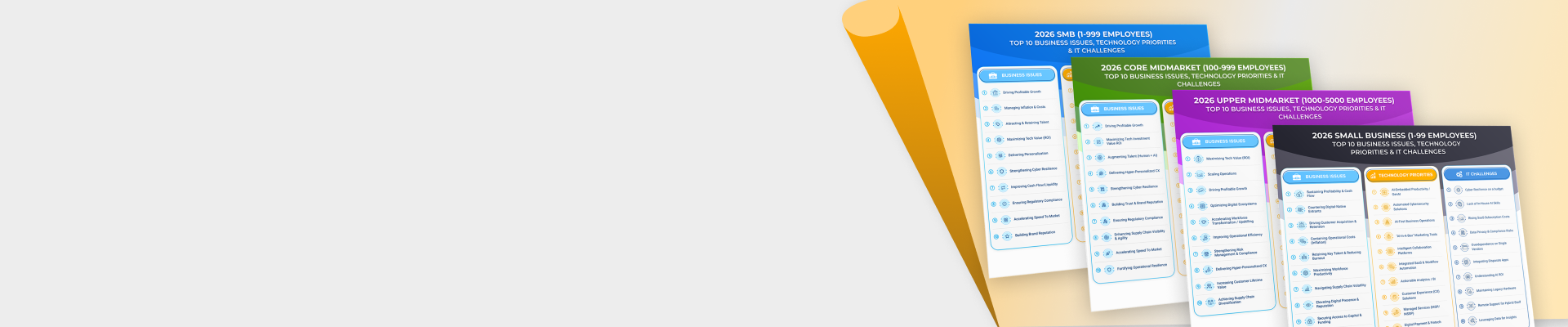
    2026 TOP 10 SMB BUSINESS ISSUES, IT PRIORITIES, IT CHALLENGES

  • 2026 TOP 10 SMB PREDICTIONS

    2026 TOP 10 SMB PREDICTIONS

    SMB & Midmarket: Autonomous Business
    READ
  • 2026 TOP 10 PARTNER PREDICTIONS

    2026 TOP 10 PARTNER PREDICTIONS

    Partner & Ecosystem: Next Horizon
    READ
  • IT SECURITY TRENDS

    IT SECURITY TRENDS

    SMB & Midmarket Security Adoption Trends
    LATEST RESEARCH
  • PARTNER ECOSYSTEM

    PARTNER ECOSYSTEM

    Global Channel Partner Trends
    LATEST RESEARCH

Techaisle Analyst Insights

Trusted research and strategic insight decoding SMBs, the Midmarket, and the Partner Ecosystem.
Anurag Agrawal

Cisco IQ: Repricing the Economics of Infrastructure Support

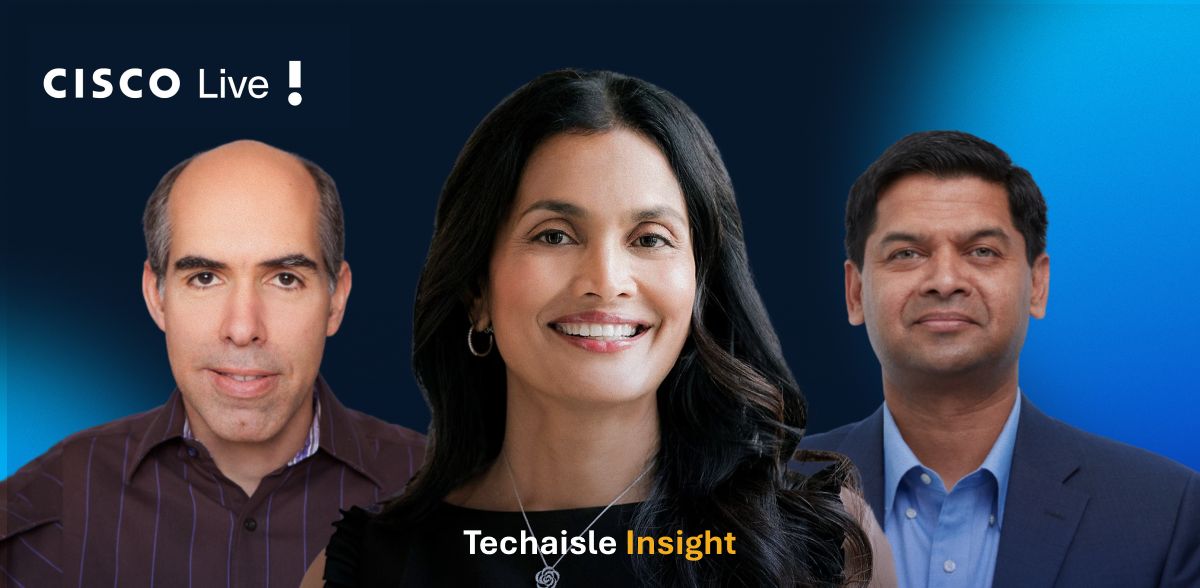
On Monday morning, 1st June, 2026, a total of 1,500 customers had self-onboarded onto Cisco IQ. By evening, it was 1,600. Tuesday morning, 1,700. By the time I left Cisco Live 2026 in Las Vegas, Tuesday evening, I was told the number had crossed 2,000.

But I am getting ahead of myself.

The Constraint Cisco IQ Removes

Enterprise support has been a reactive business for twenty years, and not for lack of ambition. It was reactive because it was blind. Between audits, no vendor had an accurate, up-to-date picture of what a customer was running, which devices were exposed, and which had drifted out of compliance. Support waited for the failure and billed to fix it. That blindness, not the absence of AI, is the constraint that defined the category.

Cisco IQ removes the constraint. At its simplest, it is an intelligence layer that sits over a customer’s entire Cisco estate. Strip away the module names, and what it does is make that estate continuously legible. It fuses asset telemetry pulled from the live network, contract and entitlement records, and two decades of support history into a single, always-current model of what the customer runs, and it reasons over that model without waiting to be asked. The AI is the visible part, but it sits atop the harder thing: a reconciled, constantly updated model of the estate. That model is what competitors cannot easily reproduce, because it is built from years of data rather than shipped as a feature.

techaisle cisco cx writeup

Tags:
Anurag Agrawal

Salesforce Agentforce IT Service – The Shift from Managing Tickets to Reasoning Resolutions

In my recent deep-dive briefing with Muddu Sudhakar, SVP & GM, Agentic IT and HR Service, and the AgentForce IT Service team, one thing became abundantly clear: the ticket as we know it is on life support. While the industry has spent decades perfecting the art of managing the ticket lifecycle—from creation to closure—Salesforce is betting its future on eliminating the need for tickets.

The announcement of Agentforce IT Service is not just another SKU in the Salesforce catalog; it is a fundamental architectural pivot from "System of Record" to "System of Action." As an analyst who has tracked the ecosystem for years, I see this as a democratization event—bringing enterprise-grade, reasoning-based AI to the messy middle of IT operations.

Here is why this move matters, where the differentiation lies, and where the battle lines are being drawn.

The Reasoning Engine vs. The Remediation Script

The most profound insight from the briefing wasn't the feature set, but the architectural philosophy. We are witnessing a sharp divergence in how AI is applied to IT. On one side, incumbents like ServiceNow—bolstered by their recent acquisition of Moveworks—are doubling down on what I call prescriptive AI. This model excels at summarization and recommending the next best action for a human agent, but it remains fundamentally constrained by deterministic playbooks and rigid decision trees. It is efficient, but it is ultimately a helper that waits for instructions.

Salesforce, in contrast, is deploying Reasoning AI. These agents are not merely following a script; they use non-deterministic workflows to reason through problems. During the demo, this distinction was vivid: I watched an agent autonomously troubleshoot a VPN issue, not by simply surfacing a knowledge article, but by actively diagnosing the root cause (a client mismatch) and proposing a specific resolution (switching gateways). This architectural shift—from proposing a fix to reasoning through it—is critical. It moves IT operations from a reactive break/fix posture to a proactive predict/prevent reality. However, this autonomy is not unchecked; it is governed by a native end-to-end ITIL framework, ensuring that every automated resolution adheres to the strict lifecycle of Incident, Problem, and Change management that IT leaders demand.

Anurag Agrawal

Interwork 2.0: The Agentic Future of Connected Business

In 2017, Techaisle introduced the concept of Interwork, predicting that the future of business
would not be defined by the "net" (connectivity) but by the "work" enabled by a ubiquitously
connected platform. We argued that the destination was an "always-on, everywhere
connected Interwork platform" where cloud, edge, applications, and security formed a single
cohesive fabric.

The industry spent the last eight years building that connected foundation. But as we enter 2026, the goalpost has moved. Connectivity is no longer the destination; it is merely the nervous system. The new brain of the enterprise is Agentic AI.

In this new strategic white paper, Techaisle outlines the transition from the Connected Business to the Autonomous Enterprise. We analyze how the seven pillars of IT infrastructure—from the Cloud to the Edge—are evolving from passive "pipes" into active, intelligent participants that perceive, reason, and act.

Download this white paper to discover:

  • The 7 Pillars of Agentic Intelligence: How the "Connected Edge" is becoming the "Agentic Edge" and "Connected Security" is morphing into "Autonomous Defense."

  • The Vision vs. Reality Roadmap: A detailed look at how our 2017 predictions have materialized and where the market is heading for 2030.

  • The Vendor Ecosystem: A comprehensive map of the "Agentic Grid Architects," "Edge Builders," and "Integrators" (including NVIDIA, Microsoft, Dell, Cisco, and Deloitte) who are powering this shift.

  • The Strategic Pivot: Why CIOs must stop selling "capacity" and start selling "autonomy."

techaisle the agentic future connected business

Anurag Agrawal

Beyond the Breach: Techaisle's Top 10 SMB & Mid-Market Security Predictions for 2026

The 2025 security landscape was defined by the democratization of AI and a slow march toward Zero Trust. But 2026 will be defined by something far more complex: a crisis of trust and translation.

We have reached a tipping point where SMBs and mid-market firms are no longer just targets; they have become the unwilling, unmanaged beachhead for attacks in the broader economy. The threats are no longer just about breaching the network—they are about breaching the process. Consequently, the new battleground isn't technology alone; it is liability, insurance, business logic, and the structural integrity of the IT channel.

Below are the three strategic shifts and ten specific predictions that will define this new reality.

techaisle smb security predictions 650

Trusted Research | Strategic Insight

Techaisle - TA