• TRUSTED RESEARCH

    TRUSTED RESEARCH | STRATEGIC INSIGHT

    SMB. CORE MIDMARKET. UPPER MIDMARKET. ECOSYSTEM
    LEARN MORE
  • COMMS, COLLAB, CONTACT CENTER

    COMMS, COLLAB, CONTACT CENTER

    SMB & Midmarket Buyers Collaboration, Contact Center Study
    LATEST RESEARCH
  • DATACENTER SOLUTIONS

    DATACENTER SOLUTIONS

    SMB & Midmarket Datacenter Solution Adoption Trends
    LATEST RESEARCH
  • PARTNER ECOSYSTEM

    PARTNER ECOSYSTEM

    CHANNEL PARTNER ECOSYSTEM TRENDS STUDY
    LATEST RESEARCH
  • BUYER JOURNEY

    BUYER JOURNEY

    SMB & Midmarket Buyers Journey Research
    LATEST RESEARCH
  • BUYER PERSONAS

    BUYER PERSONAS

    SMB & Midmarket Technology Buyer Persona Research
    LATEST RESEARCH
  • ARTIFICIAL INTELLIGENCE

    ARTIFICIAL INTELLIGENCE

    SMB & Midmarket Analytics & Artificial Intelligence Adoption
    LATEST RESEARCH
  • IT SECURITY TRENDS

    IT SECURITY TRENDS

    SMB & Midmarket Security Solutions Adoption Trends
    LATEST RESEARCH
  • 2026 TOP 10 SMB BUSINESS ISSUES, IT PRIORITIES, IT CHALLENGES

    2026 TOP 10 SMB BUSINESS ISSUES, IT PRIORITIES, IT CHALLENGES

  • 2026 TOP 10 SMB PREDICTIONS

    2026 TOP 10 SMB PREDICTIONS

    SMB & Midmarket: Autonomous Business
    READ
  • 2026 TOP 10 PARTNER PREDICTIONS

    2026 TOP 10 PARTNER PREDICTIONS

    Partner & Ecosystem: Next Horizon
    READ

Techaisle Analyst Insights

Trusted research and strategic insight decoding SMBs, the Midmarket, and the Partner Ecosystem.
Anurag Agrawal

The New XPS 14 Is Dell at Its Best Again and Won Me Over

First, the verdict: the new XPS 14 is a laptop I recommend, and highly. I have a complicated history with the XPS name, though, and so does Dell.

I have been using the XPS brand laptops since 2012, when the first XPS 13 arrived as one of Intel's Ultrabooks, a $999 Windows answer to the MacBook Air. I was not always an easy sell on where Dell took the line next. When 2-in-1s were the fashion, I stood at an Intel offsite and argued for two hours, with Techaisle data behind me, that the category would struggle. I had tried the contraptions, including Dell's original XPS Ferris-Wheel, and none of them convinced me to give up a clamshell. Then a few years later Dell sent me an XPS 13 2-in-1; I put it through a road test, and it made a convert of me. That is the thing about this line. It has a habit of winning arguments I walked in ready to lose.

By 2020, I was calling the XPS 13 perfection personified. I opened the 9300, set it on my desk, and let it sit for three days before I could bring myself to use it. For years, this was the one Windows laptop I could hand to someone without a caveat.

Then Dell decided the name had to go. In 2025, XPS became Dell Premium, the top rung of a new consumer ladder of Dell, Dell Plus, and Dell Premium, while the Pro and Pro Max labels went off to the commercial and workstation machines. It all looked tidy on an org chart and meant nothing to the person actually shopping for a laptop. I sat through more than one briefing where I watched a room full of smart people explain a naming system that answered a question nobody had asked. The machines stayed good throughout.

They just lost the one word that told you so at a glance.

This year Dell admitted it made a mistake and brought XPS back. New design, new silicon, same three letters. I have spent the last few months with the new XPS 14, and I have enjoyed nearly all of it.

Anurag Agrawal

Dell Stopped Selling Boxes. It Started Selling the Place Where Tokens Run.

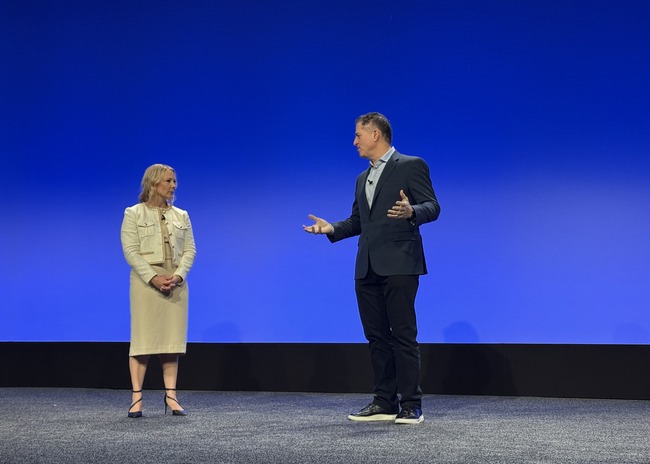
Michael Dell opened Dell Technologies World with a line that sounded like theater but was actually a strategy: just as electricity transformed the world when it left the power plant, AI will transform the world when it leaves the screen. With intelligence becoming infrastructure, the job now is to make it real, local, secure, and useful, whether that is on an oil rig, in an ambulance, or on the factory floor.

The most revealing moment came a day later, when Jeff Clarke admitted that his own engineers burned through a month's worth of allocated tokens in a few hours. This happened not because something broke, but because it worked perfectly. Put those two moments together, and you have the entire event's thesis. Michael Dell named the destination (intelligence everywhere it is needed), while Clarke named the bill that arrives when you get there. Ultimately, what Dell announced was not a refresh cycle; it was a bet on where intelligence physically lives, and who pays the meter to run it.
techaisle dell dtw 2026

The number that should reset every infrastructure budget

From the keynote stage, Jeff Clarke cited figures that framed everything that followed: token prices have fallen roughly 80% year over year, yet consumption for reasoning has surged 320-fold. Furthermore, inference, not training, now accounts for nearly two-thirds of all AI compute. Whatever the underlying sources of this data, the direction is indisputable and directly mirrors what Techaisle has been tracking from the buyer side all year.

Reading those numbers together leads to an unavoidable conclusion: the unit cost of intelligence is collapsing, yet total spend is accelerating. This is the exact pattern Techaisle named Token Shock. We've seen this curve before with bandwidth, storage, and compute, where cheaper units unlock so much new consumption that the overall bill climbs anyway. What sets this era apart is the sheer speed, as no one has seen a cost curve bend this quickly.

The strategic consequence, and the line Clarke delivered that should be sitting in every CFO conversation, is that as agents take on more cognitive work, costs migrate from headcount to tokens. Historically, cognitive work scaled with human hours; if you wanted more analysis, you hired more analysts. Agentic AI has broken that ratio entirely. Techaisle data puts a number on how far it has already shifted: the Agent-to-Human Ratio has reached 144-to-1 in the midmarket and 59-to-1 in small businesses. With the agentic workforce already deployed at that density, it's alarming that most of the operating models meant to govern it still assume a payroll rather than a token budget.

Dell's actual announcement was an answer to "Where"

Across both keynotes, one question sat underneath every announcement: where should a given token run?

Anurag Agrawal

Unpacking Dell Technologies World: Seven Key Takeaways for Midmarket and Channel Partners Navigating the AI Era

Dell Technologies World 2025 (DTW) recently provided a comprehensive look into Dell's strategy and vision, with a particular focus on the transformative power of Artificial Intelligence (AI) for businesses of all sizes. Keynotes from Michael Dell and Jeff Clarke, alongside detailed briefings on Client Solutions Group (CSG) and Infrastructure Solutions Group (ISG), painted a picture of a company positioning itself as the end-to-end partner for the AI journey. While much attention often focuses on hyperscalers and large enterprises, Dell offers significant opportunities and tailored strategies for the midmarket as well as the vital channel partners who serve them.

techaisle dtw25 blog

Here are my seven key takeaways:

1. The Dell AI Factory is an End-to-End AI Framework, Not Just Hardware

Dell introduced and expanded upon the concept of the Dell AI Factory, describing it as an unmatched set of capabilities in the industry designed to help businesses get started with Generative AI and scale it. It is presented as an open, modular infrastructure with a rich ecosystem, delivering powerful GPUs, scalable storage, high-throughput networking, curated tooling, and integrated cutting-edge models, supported by deployment services. This framework covers the entire computing architecture for modern AI workloads, from PCs to data centers and the edge. Dell has helped over 3,000 businesses build their factories and launched over 200 new features since its inception a year ago. The vision is for customers to bring their own company data to the AI Factory, driving unique business outcomes.

Why this is important for Midmarket and Channel Partners: This framework provides a structured approach to AI adoption. For midmarket, it demystifies the complex landscape of AI infrastructure by offering a seemingly integrated and supported stack. They don't need to piece together disparate components or become AI experts overnight. For channel partners, the AI Factory is a complete solution portfolio to take to customers. Dell is making it easier to consume and deploy through reference architectures and packaged software. This enables partners to concentrate on delivering value and outcomes, rather than merely selling individual pieces of hardware. The concept of bringing "your own company data" to drive outcomes resonates strongly with businesses of all sizes, emphasizing that AI value is tied to their unique operations and data, which partners are often intimately familiar with.

Anurag Agrawal

Dell AI PCs: Powering the Future of Productivity and Innovation

On March 12th, Dell unveiled its updated commercial lineup featuring AI-powered PCs. The lineup includes the Latitude 5000 (5340, 5450, 5550), 7000 (7350, 7450, 7650), and 9000 (9450) series, along with the introduction of the new Latitude 7350 Detachable, set to be available in Q2. Inspired by Concept Luna, the Latitude 7350 Detachable is likely the most serviceable commercial detachable. Dell is also enhancing its headset lineup with the Dell Premier Wireless ANC Headset (WL7024). This headset features AI-powered noise-canceling microphones that intelligently differentiate human speech from background noise and dynamically adjust the noise cancellation level based on the user’s surroundings.

Beyond the Hype: A Look Inside Dell's AI-Powered PCs

The computing landscape is rapidly evolving, and artificial intelligence (AI) is at the forefront of this transformation. Dell, a leading technology company, is at the forefront of this movement, offering a range of AI-powered PCs designed to empower users and businesses to achieve more. In the ever-evolving landscape of technology, Dell Technologies has once again pushed the boundaries with its latest innovation: a new line-up of commercial AI Latitude laptops. These cutting-edge devices are designed to enhance productivity, security, and collaboration for business professionals in the hybrid work era. Predictions about the “AI PC” have been enigmatic, but Dell is already showing how these computers can be genuinely helpful. Windows operating systems may soon incorporate AI-driven features, making everyday tasks more proactive and efficient. Imagine a PC that anticipates your needs, adapts to work patterns, and enhances the overall experience.

Dell AI PCs are not a distinct product category; they represent a designation for Dell laptops and workstations equipped with features and hardware optimized for AI tasks. Essentially, a Dell AI PC is an accelerated computer. Dell has been integrating purpose-built accelerators into its PCs for over two decades. Initially, this involved using GPUs in Precision workstations, which acted as accelerators, enabling local execution of AI workloads. There’s a new option: the NPU (Neural Processing Unit). While the NPU is gaining attention, Dell defines an AI PC simply as a computer capable of efficiently handling AI workloads or AI-optimized applications through a GPU or an NPU. This definition applies to desktops, laptops, and workstations alike.

Dell Latitude AI PCs feature robust Intel Core Ultra processors with Intel vPro at their core. These processors are built on Intel 4 process technology (7nm). The system harnesses various compute engines, including P-cores, E-cores, Intel Arc GPU, and Intel AI Boost, to accelerate AI inferencing at the edge. This collaborative approach reduces reliance on separate accelerators, ultimately streamlining system complexity and cost.

Dell has not only enhanced system configuration with AI but also offers AI-optimized software to elevate the computing experience. Dell Optimizer utilizes AI to enhance system performance, prolong battery life, and enhance overall user satisfaction. Furthermore, My Dell, another AI-powered tool, provides personalized recommendations and support for consumers and small business users.

dell latitude ai pcs


Beyond Awareness: SMBs Show Strong Purchase Intent for AI PCs

The PC market is poised for a refresh, and AI-powered PCs will significantly impact the industry in the next 3-5 years. According to Techaisle data, SMBs and midmarket companies are not only embracing this trend but may even lead it. A recent survey by Techaisle, covering over 4500 SMBs and midmarket firms, reveals that awareness of AI PCs is remarkably high: 70% among small businesses, 82% in core midmarket firms, and 86% in upper midmarket firms. While smaller SMBs show healthy interest, with 24% planning to purchase AI PC units, core midmarket businesses are even more enthusiastic, with 38% intending to invest. The upper midmarket segment demonstrates the highest intent, with 64% planning to explore AI PCs.

Trusted Research | Strategic Insight

Techaisle - TA