• TRUSTED RESEARCH

    TRUSTED RESEARCH | STRATEGIC INSIGHT

    SMB. CORE MIDMARKET. UPPER MIDMARKET. ECOSYSTEM
    LEARN MORE
  • COMMS, COLLAB, CONTACT CENTER

    COMMS, COLLAB, CONTACT CENTER

    SMB & Midmarket Buyers Collaboration, Contact Center Study
    LATEST RESEARCH
  • DATACENTER SOLUTIONS

    DATACENTER SOLUTIONS

    SMB & Midmarket Datacenter Solution Adoption Trends
    LATEST RESEARCH
  • PARTNER ECOSYSTEM

    PARTNER ECOSYSTEM

    CHANNEL PARTNER ECOSYSTEM TRENDS STUDY
    LATEST RESEARCH
  • BUYER JOURNEY

    BUYER JOURNEY

    SMB & Midmarket Buyers Journey Research
    LATEST RESEARCH
  • BUYER PERSONAS

    BUYER PERSONAS

    SMB & Midmarket Technology Buyer Persona Research
    LATEST RESEARCH
  • ARTIFICIAL INTELLIGENCE

    ARTIFICIAL INTELLIGENCE

    SMB & Midmarket Analytics & Artificial Intelligence Adoption
    LATEST RESEARCH
  • IT SECURITY TRENDS

    IT SECURITY TRENDS

    SMB & Midmarket Security Solutions Adoption Trends
    LATEST RESEARCH
  • 2026 TOP 10 SMB BUSINESS ISSUES, IT PRIORITIES, IT CHALLENGES

    2026 TOP 10 SMB BUSINESS ISSUES, IT PRIORITIES, IT CHALLENGES

  • 2026 TOP 10 SMB PREDICTIONS

    2026 TOP 10 SMB PREDICTIONS

    SMB & Midmarket: Autonomous Business
    READ
  • 2026 TOP 10 PARTNER PREDICTIONS

    2026 TOP 10 PARTNER PREDICTIONS

    Partner & Ecosystem: Next Horizon
    READ

Techaisle Analyst Insights

Trusted research and strategic insight decoding SMBs, the Midmarket, and the Partner Ecosystem.
Anurag Agrawal

Beyond the Smart Device: Lenovo Qira and the Rise of Ambient Ecosystems

The technology industry has spent the last two years locked in a frantic race to define the AI PC. Until now, the conversation has been dominated by NPU specifications, TOPS (Trillions of Operations Per Second), and local model capabilities. However, the hardware has arrived mainly before the killer use case, leaving SMBs, enterprises, and consumers asking: Why does this matter?

At CES 2026, Lenovo answered that question—not with a faster chip or a new form factor, but with a fundamental architectural shift. The announcement of Lenovo Qira signals a pivot from selling isolated AI-ready hardware to delivering a unified, Ambient Intelligence ecosystem.

techaisle lenovo qira 650

From a Techaisle analyst perspective, Lenovo Qira is not merely another digital assistant in an overcrowded market of chatbots. It represents a strategic attempt to solve the fragmentation of user intent across the Windows and Android divides. By leveraging its unique position as a dual owner of PC (Lenovo) and Mobile (Motorola) strongholds, Lenovo is attempting to build what competitors like Dell and HP cannot: a native, cross-device neural fabric.

Here is my analysis of why Lenovo Qira matters, how it differentiates Lenovo in a commoditized hardware market, and the challenges that lie ahead.

Anurag Agrawal

Architecting the Future-Ready Midmarket: Lenovo's New Playbook for IT Modernization and AI

The global midmarket is a tricky beast. It possesses the ambition and complexity of a large enterprise but often operates with the resource constraints of a small business. For years, Techaisle has maintained that the midmarket is the true battleground for technology growth, urging vendors to address its unique needs. In 2025, it seems that the call has been answered.

These organizations are the engine of economic growth. In fact, Techaisle data reveals this segment is a hotbed of high-growth businesses. Within the upper midmarket (1000-4999 employees), a remarkable 67% of firms are classified as high-growth, projecting an average revenue increase of 7.4% for the coming year. This trend continues in the core midmarket (100-999 employees), where 57% of firms are on a high-growth trajectory, anticipating revenue growth of 6.2%.

Yet, this very growth creates a constant tug-of-war between the need to modernize and the practical limitations of budget, time, and in-house IT expertise. According to Techaisle research, 78% of midmarket firms identify IT complexity as a significant obstacle to digital transformation, and 59% cite a lack of specialized skills as the primary barrier to adopting new technologies like AI. It is precisely this market reality that Lenovo is targeting with its latest suite of flexible solutions for SMBs and midmarket businesses.

Lenovo's announcement is not merely a product refresh; it is a strategic, cohesive, and channel-centric approach designed to de-risk technology adoption and accelerate time-to-value for the midmarket. The strategy is built on three interconnected pillars: simplified, pre-validated Business Solutions in a Box; accessible, outcome-focused AI Solutions; and flexible, intelligent Services & Platforms. This analysis will deconstruct these announcements to explore why they are differentiated and why they matter deeply to midmarket businesses and the channel partners who serve them.

The "In-a-Box" Approach – Building the Foundation for Growth

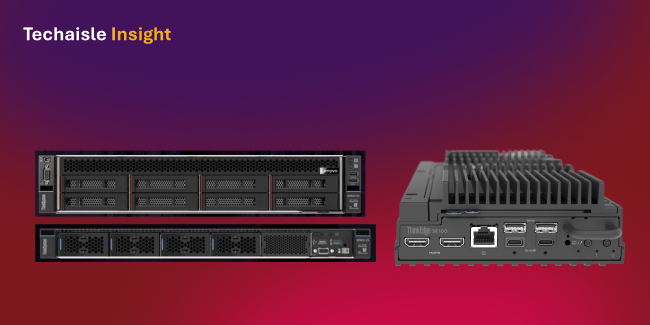
For SMBs and midmarket firms, unstable IT is like a cracked foundation—nothing innovative or ambitious can be built upon it. Yet, for years, midmarket IT teams have been forced to act as systems integrators, painstakingly assembling servers, storage, networking, and software into functional solutions. This process is time-consuming, fraught with risk, and diverts scarce IT resources from value-added projects. Lenovo’s "in-a-box" concept directly attacks this foundational pain point.

techaisle lenovo midmarket smb 650

Anurag Agrawal

Realizing AI Potential: Why Lenovo AI Workstations should be at the Heart of Compute Strategy

From my vantage point as an industry analyst at Techaisle, it's clear the AI landscape has moved far beyond nascent experimentation. We are now witnessing AI deeply embedding itself into the fabric of enterprise operations across diverse industries. This evolution, fueled by an ever-increasing volume and complexity of data, is not just about technological advancements; it's about a fundamental shift that demands specialized, robust solutions that truly deliver business value.

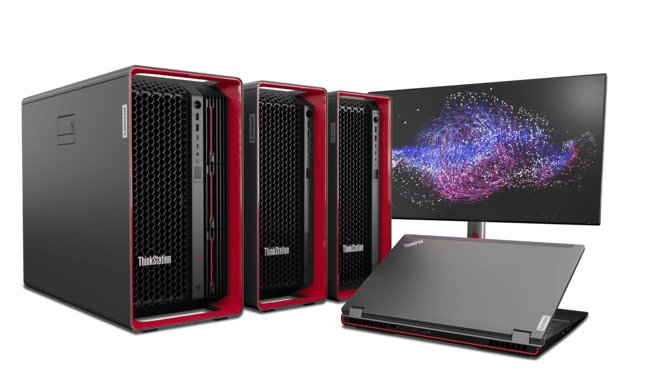
In this dynamic environment, Lenovo AI Workstations emerge not just as powerful tools but as critical and indispensable components within the broader AI compute continuum, spanning from personal AI PCs to massive High-Performance Computing (HPC) clusters and cloud environments. Lenovo has meticulously designed its AI workstations, notably the ThinkStation P Series and ThinkPad P Series, ensuring they serve as the agile, secure, and cost-effective hub for enterprise-grade AI development and deployment.

14 ThinkStation PX P7 P5 ThinkPad P16 ThinkVision P27 30 Family Shot

Techaisle's recent in-depth research with enterprise customers, midmarket firms, and SMBs consistently reveals a critical challenge: organizations are grappling with how to harness AI for tangible business outcomes effectively. They're looking for more than just raw computational power; they need solutions that integrate seamlessly into existing workflows, protect sensitive data, and offer predictable costs.

This is precisely where a hybrid AI strategy becomes paramount. At its core, Hybrid AI is the strategic combination of diverse AI techniques and deployment models, blending the strengths of on-premises infrastructure (like Lenovo AI Workstations and private clouds) with public cloud resources and edge computing. It's not about choosing one over the other, but somewhat intelligently distributing AI workloads where they make the most sense.

Lenovo AI Workstations: The On-Ramp to Operationalized AI for Businesses of All Sizes

Anurag Agrawal

Techaisle Review and Impressions: Lenovo ThinkPad X9-14 Gen 1 Aura Edition Begins a New Era

February was a whirlwind of travel, and the ThinkPad X1 Carbon Gen 13 became my indispensable companion. From airplane seats to bustling conference rooms, this laptop proved its worth. Its feather-light design, a mere 2.17 pounds, made it effortlessly portable, slipping into my bag without adding bulk. The robust carbon fiber and magnesium chassis shrugged off the rigors of travel, maintaining its sleek appearance despite constant jostling. The Intel Core Ultra 7 258V processor handled everything I threw at it, from resource-intensive presentations to seamless video conferencing, without a hiccup. The battery life was a revelation, easily lasting through full workdays without needing a recharge, a godsend during layovers. Returning home, I found the ThinkPad X9-14 Gen 1 waiting for me, and I could not wait to dive in, eager to compare its innovations to the X1 Carbon Gen 13 that had served me so well in the last month.

As I opened the packaging of the Lenovo ThinkPad X9-14 Gen 1, I was immediately struck by the aesthetic shift. The new silver aluminum chassis gleamed, a stark contrast to the traditional matte black, and the absence of the iconic red TrackPoint was noticeable, though not entirely unexpected, as I had previewed the design earlier in the year.

For over thirty years, Lenovo's ThinkPad has been the bedrock of enterprise computing, defined by its rugged reliability and iconic design. Now, with the ThinkPad X9-14 Gen 1 Aura Edition (part of the broader X9 series revealed at CES 2025 and many other insane innovations), Lenovo dares to redefine its legacy for the modern hybrid workforce. My review dives into the implications of this bold departure, dissecting the sleek silver aluminum chassis, the controversial removal of the signature red TrackPoint, and its ambition to challenge the premium notebook market. Having spent considerable time with a review unit, I conclude that the Lenovo ThinkPad X9-14 Gen 1's exceptional display, typing ergonomics, and mobile efficiency will reshape the ThinkPad experience in 2025.

Design Evolution: A Shift in Color and Identity

The ThinkPad X9-14 Gen 1 boldly redefines its aesthetic, a stark departure from the traditional ThinkPad ethos. Gone is the iconic, utilitarian matte black, replaced by a sleek, silver aluminum chassis christened "Thunder Grey." This is not merely a cosmetic change; it's a strategic repositioning aiming to attract a broader audience, including style-conscious creatives and younger professionals. The fingerprint-resistant finish maintains a polished look, which is crucial for mobile professionals.

From a Techaisle perspective, this shift presents both a risk and an opportunity. The over 50% recycled aluminum aligns with growing sustainability demands and offers a premium feel. However, the departure from black may alienate loyalists who associate it with ThinkPad's rugged heritage. Lenovo is betting that modern hybrid workers, flitting between offices, homes, and travel, desire a device that excels in both boardroom and coffee shop settings.

The most polarizing decision, however, is the removal of the red TrackPoint, a hallmark of ThinkPads since 1992. For decades, this precision tool nestled between the G, H, and B keys offered a unique advantage, beloved by users like myself. Its absence in the X9-14 Gen 1, replaced by a large, centered haptic touchpad, signals Lenovo's acknowledgment of the TrackPoint's niche status in a touchpad-dominated world. This trade-off between modernization and legacy support will be a key consideration for businesses with diverse user needs.

The haptic touchpad’s generous size and customizable pressure sensitivity offer smooth, responsive feedback, rivaling implementations from competition. Similarly, while retaining ThinkPad's signature curved keycaps, the keyboard adopts a modernized layout with crisp, satisfying feedback, balancing tradition and contemporary appeal.

Flipping over the laptop, a standout feature is the "engine hub," a rear strip housing full-size ports (Thunderbolt 4, HDMI 2.1, headphone jack) while maintaining a slim profile. This design also enhances serviceability, providing easy access to the SSD and battery. At 2.74 pounds, the X9-14 Gen 1 is remarkably light, yet its sturdy aluminum build ensures durability. The 180-degree lay-flat hinge adds further versatility, making it a compelling option for demanding hybrid work environments. Audio quality is enhanced with Dolby Atmos and Dolby Voice, supporting clear video calls, which is crucial for remote collaboration.
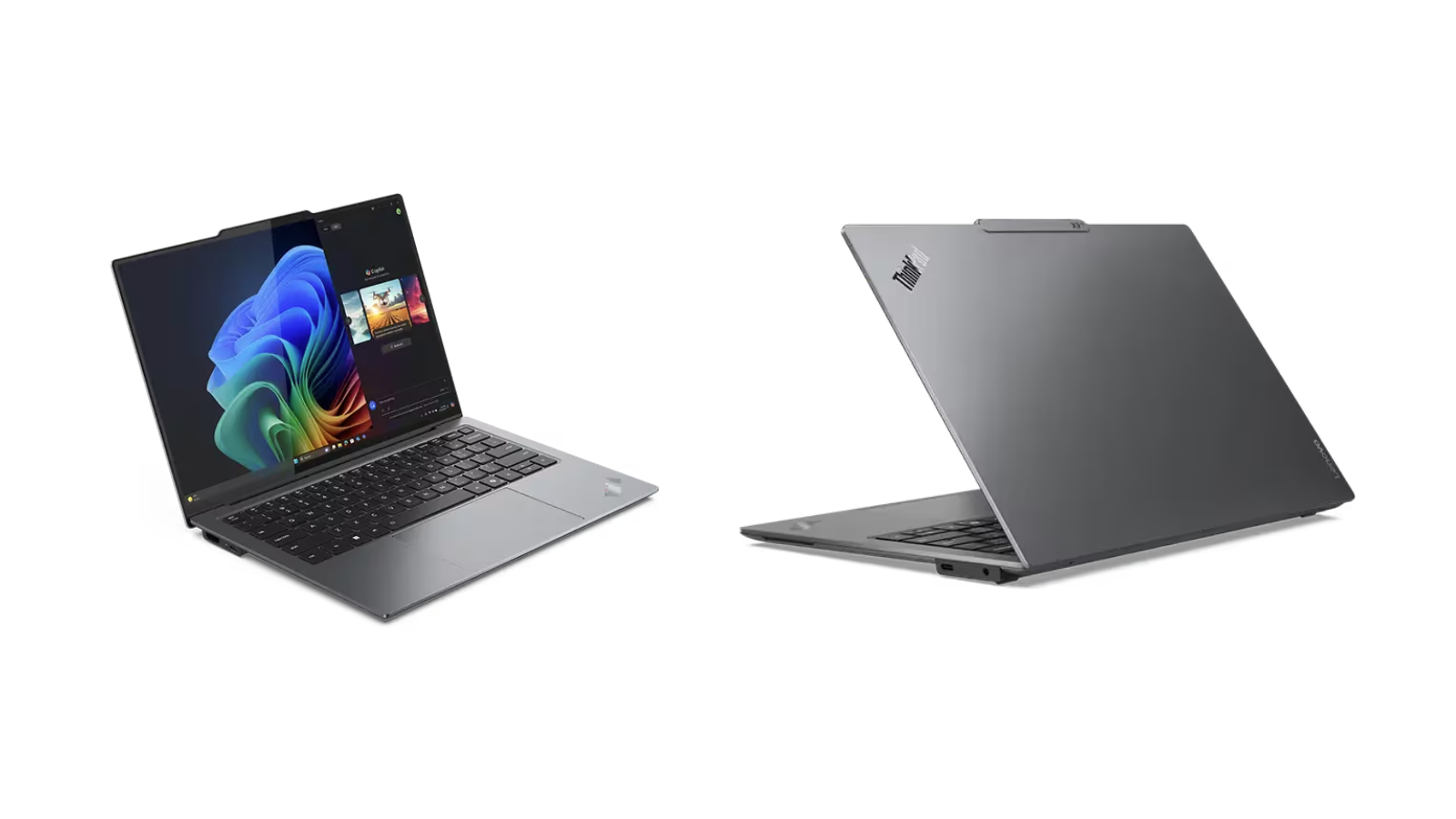
techaisle lenovo thinkpad x9 gen1

Trusted Research | Strategic Insight

Techaisle - TA