










Techaisle Analyst Insights
Beyond the Smart Device: Lenovo Qira and the Rise of Ambient Ecosystems
The technology industry has spent the last two years locked in a frantic race to define the AI PC. Until now, the conversation has been dominated by NPU specifications, TOPS (Trillions of Operations Per Second), and local model capabilities. However, the hardware has arrived mainly before the killer use case, leaving SMBs, enterprises, and consumers asking: Why does this matter?
At CES 2026, Lenovo answered that question—not with a faster chip or a new form factor, but with a fundamental architectural shift. The announcement of Lenovo Qira signals a pivot from selling isolated AI-ready hardware to delivering a unified, Ambient Intelligence ecosystem.
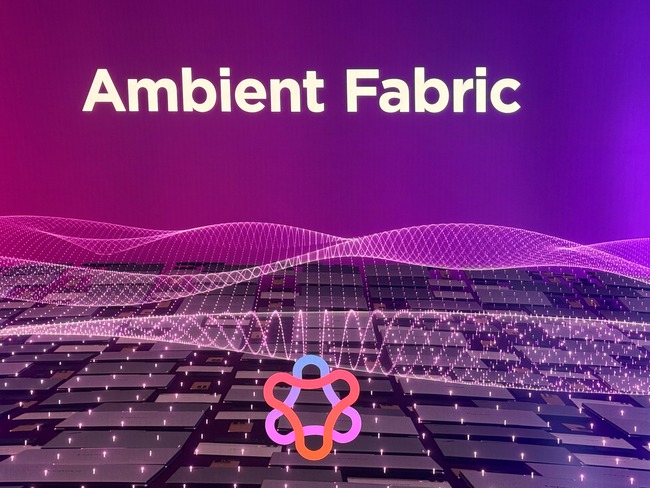
From a Techaisle analyst perspective, Lenovo Qira is not merely another digital assistant in an overcrowded market of chatbots. It represents a strategic attempt to solve the fragmentation of user intent across the Windows and Android divides. By leveraging its unique position as a dual owner of PC (Lenovo) and Mobile (Motorola) strongholds, Lenovo is attempting to build what competitors like Dell and HP cannot: a native, cross-device neural fabric.
Here is my analysis of why Lenovo Qira matters, how it differentiates Lenovo in a commoditized hardware market, and the challenges that lie ahead.
The Architecture of Presence: Moving Beyond the Chatbot
The current generation of AI interaction is transactional: the user stops working, opens a chatbot, issues a prompt, receives an answer, and then attempts to reintegrate that answer into their workflow. It is high-friction.
Lenovo Qira is designed to be ambient and system-level rather than app-based. Techaisle views this as a critical evolution in User Experience (UX) design, characterized by three architectural shifts:
- System-Level Persistency - Unlike standard applications that must be actively launched, when enabled by the user, Lenovo Qira maintains a persistent state at the edge of the UX. It does not compete for attention as a window; it exists as a ubiquitous layer that operates with user permission, accessible via hardware triggers or peripheral visual cues.
- Why it Matters: This lowers the interaction cost of AI. By removing the friction of context-switching (Alt-Tabbing to a chatbot), Lenovo transforms the AI from a destination you visit into a utility that is always available. This persistence is required to move from occasional query-based usage to continuous workflow augmentation.
- Contextual Intelligence & Unified Memory The true differentiation lies in Lenovo Qira's ability to construct a cross-device data substrate. Rather than just indexing files, it builds a dynamic graph of user intent—connecting a document viewed on a ThinkPad to a related message received on a Motorola smartphone.
- Why it Matters: This is the strategic moat. A cloud-based LLM (like ChatGPT) has no visibility into local, transient user behavior across device boundaries. By owning the hardware endpoints (PCs and Phones), Lenovo creates a proprietary data gravity that locks in users. The more the system learns this personal graph, the higher the switching cost becomes for the customer.
- Agentic Orchestration Moving beyond text generation – Lenovo Qira functions as an orchestration engine designed to execute complex, multi-step workflows. It acts as a manager of other agents, coordinating software interactions to complete tasks rather than just describing how to do them.
- Why it Matters: This addresses the last-mile problem of productivity. Generative AI creates content; Agentic AI completes work. By positioning Lenovo Qira as the executor that interacts with other applications, Lenovo prevents its hardware from becoming a "dumb pipe" for cloud software, retaining control over the execution layer of the user's daily tasks.
Analyst Take: The differentiation here is contextual continuity. Microsoft’s Copilot is powerful but tethered mainly to the Microsoft 365 graph and the Windows OS. Google’s Gemini is tethered to the Workspace and Android. Lenovo Qira attempts to sit above these, acting as the connective tissue that holds the user’s context as they switch from a ThinkPad to a Motorola Razr. As Luca Rossi, President of Lenovo’s Intelligent Devices Group (IDG), noted, the goal is "One personal AI, multiple devices"—a companion that sees what you see and thinks with you.
The Strategic Moat: The Cross-Device Leap
Lenovo Qira addresses a core user problem: users exist in multiple digital states (mobile/PC, work/personal) simultaneously, yet their data does not.
Lenovo Qira’s primary differentiator is its ability to be a single intelligence that travels with the user. This is a direct assault on Apple's walled garden advantage. Apple has successfully created continuity between Mac and iPhone, but that ecosystem is closed and premium-consumer focused. The Windows/Android demographic—which constitutes the vast majority of global enterprise and SMB users—has lacked a unified nervous system.
Lenovo is uniquely positioned to fill this gap. Unlike HP or Dell, which rely on third-party software (like Microsoft’s Phone Link) to bridge the gap to the smartphone, Lenovo owns the Motorola stack. This allows for:
- System-Level Integration: Lenovo Qira is not just an app running on the phone; it is the intelligence layer of the phone (Motorola Qira) and the PC.
- Local Hybrid Processing: By utilizing a hybrid AI architecture, Lenovo Qira processes personal data on-device where possible, enhancing privacy and speed—a critical requirement for enterprise adoption.
This creates a significant stickiness factor. If Lenovo Qira successfully constructs a unified semantic index of a user's meetings, emails, and workflows that spans their laptop and phone, the cost of switching away from Lenovo hardware increases dramatically. It transforms the hardware from a commodity into a subscription to a personalized ecosystem.
Orchestration: The Manager of Agents
One of the most profound insights from my analysis of the launch is Lenovo’s stance on the broader AI ecosystem. They are not trying to replace the Large Language Models (LLMs) from OpenAI, Microsoft, or Google. Instead, they are positioning Lenovo Qira as the Orchestrator.
Lenovo’s strategy establishes Lenovo Qira as the front face for the user. If a user needs a complex query answered or a specific travel itinerary planned, Lenovo Qira is architected to route that request to the best-suited specialized agent—such as Perplexity for deep research or Expedia for travel logistics. While the backend fulfillment relies on these partners, the user’s point of interaction remains unified within the Lenovo Qira interface.
Why this creates value: Enterprises are facing Agent Sprawl. Employees have a Copilot for Office, a Salesforce agent for CRM, a ServiceNow agent for IT support, and generic LLMs for research. This is cognitively overwhelming.
- The Aggregator Theory: Whoever controls the interface controls the user relationship. By positioning Lenovo Qira as the "Super Agent" or orchestration layer, Lenovo ensures it retains the primary relationship with the user, rather than ceding that ground entirely to software vendors.
- Local Context: Cloud-based agents (like ChatGPT) often lack deep visibility into what is happening locally on the device screen or in the user's offline files. Lenovo Qira’s "Live Interaction" feature, which processes screen and camera inputs in real-time, bridges the local context gap.
The Hybrid AI Reality: Connecting SSG and IDG
While Lenovo Qira is a device-centric announcement (IDG), it cannot be viewed in isolation from Lenovo’s Solutions and Services Group (SSG). For enterprise customers, Lenovo Qira is the endpoint of the Hybrid AI Factory.
- The Operational Loop: A CIO deploys Lenovo AI PCs. Lenovo Qira provides the productivity layer (summarizing meetings via "Pay Attention," drafting emails via "Write For Me"). Meanwhile, Lenovo’s SSG services manage the security, deployment, and "AI Library" of use cases on the backend.
- Differentiation: Lenovo’s "Pocket to Cloud" story (endpoint-to-infrastructure continuity) is their strongest narrative. They are not just selling the laptop; they are selling AI governance, the infrastructure (servers), and the personal agent (Lenovo Qira) in a single contract.
Challenges and Risks: The "Mixed Estate" Problem
Despite the profound potential, Techaisle identifies significant hurdles Lenovo must clear to achieve the AI Ecosystem Leader status that Luca Rossi aspires to.
- The iPhone Factor: In many mature markets, the decision-makers (executives) use iPhones, while the workforce uses Windows. If Lenovo Qira only works seamlessly between Lenovo PCs and Motorola phones, it risks alienating the premium segment of the market that will not switch to Android. Lenovo has hinted at an open ecosystem, but the experience will inevitably be better together with Motorola. This limits the total addressable market for the full Lenovo Qira experience.
- Trust and Privacy: Perception is a double-edged sword. For Lenovo Qira to be useful, it must "see" everything a user does. In an era of heightened surveillance concerns and data-sovereignty laws (GDPR, etc.), convincing IT departments to allow a system-level agent to build a dynamic profile of employee behavior will require bulletproof privacy controls. Lenovo’s emphasis on on-device processing is the right answer, but the market will need to be convinced.
- Software Execution: Historically, hardware OEMs struggle with software. Creating a seamless, bug-free, low-latency intelligence layer that spans operating systems is an immense engineering challenge. If Lenovo Qira is buggy or slows the system down, users will turn it off, and the strategy collapses.
Techaisle Guidance
For Technology Vendors & Partners: The launch of Lenovo Qira signals the end of the specs war and the beginning of the agency war. Vendors can no longer rely on Intel or AMD improvements to sell devices. The value is shifting to the software orchestration layer that sits on top of the silicon. Partners must start training their sales teams not just on hardware speeds and feeds, but on workflow continuity and AI orchestration.
For CIOs and IT Decision Makers: The AI PC is now a reality, but it requires a strategy. Do not simply refresh hardware for future-proofing. Evaluate how tools like Lenovo Qira fit into your existing software estate (Microsoft 365, Google Workspace).
- The Opportunity: Lenovo Qira offers a way to democratize executive assistants without platform lock-in. While Zoom and Teams already offer summaries, they create data silos. Lenovo Qira’s "Pay Attention" capability provides universal utility by generating transcriptions and summaries regardless of the collaboration platform. This consolidates fragmented meeting intelligence into a single, searchable repository on the device, rather than scattering sensitive data across multiple third-party clouds.
- The Action: Run pilots that specifically test the interoperability of these new device agents with your corporate security policies. The unified semantic index is robust, but you must define who owns that knowledge—especially when it resides locally on the endpoint rather than in the SaaS cloud.
Final Thoughts
Lenovo Qira is a bold bet. It attempts to redefine the PC from a tool we use into an ambient intelligent system that helps. By building a single intelligence existing across multiple device states, Lenovo is trying to build the first actual bridge between the Windows and Android islands for the mass market. If successful, they will have successfully evolved from a hardware manufacturer into a true platform orchestrator.
When you subscribe to the blog, we will send you an e-mail when there are new updates on the site so you wouldn't miss them.