












Each year, WebexOne consistently delivers not through flashy presentations but by showcasing customer-focused innovation. This year's event highlighted enhancements in employee experience, customer experience, and product innovations, emphasizing AI-ready data centers and future-proof workplaces. Cisco's comprehensive suite of products, integrated with AI, enterprise networking, and security, positions it uniquely in the market. Cisco's strategy focuses on upgrading existing products, expanding offerings, and differentiating through AI. Furthermore, Cisco continues to invest in sustainability, interoperability, and enhancement of IT operations.
Full disclosure: Techaisle leverages both Microsoft Teams and Cisco Webex, but our hearts truly lie with Webex. I personally use several Cisco devices—Cisco Desk Mini, Cisco Desk Pro, Bang & Olufsen Cisco 950 earbuds, and Webex on Apple Vision Pro—and I love them all. I was also fortunate to visit the Cisco Webex Innovation Center in Oslo, Norway, where I was astounded by five floors of cutting-edge engineering labs and a culture that nurtures groundbreaking ideas.
Let us dive into the key highlights and announcements from WebexOne.
Cisco's AI-Powered Approach to Future-Proof Workspaces
Cisco's commitment to innovation was evident in its emphasis on AI-ready data centers and future-proof workplaces. These advancements ensure seamless, secure, and efficient collaboration experiences. Introducing AI into Cisco's products aims to enhance security and workplace experiences, making them more resilient to outages. Cisco's unique market position and competitive edge stems from its ability to integrate meeting, calling, contact center, app, and device front ends on a unified AI fabric alongside enterprise networking, security, and observability.
Cisco aims to reimagine workplaces, allowing people to work from anywhere, including campuses, branches, factories, and cars. Cisco's strategy for future-proofing workspaces includes upgrading existing products, expanding offerings, and differentiating through AI. This approach ensures its solutions remain relevant and effective in an ever-evolving technological landscape. The focus is on creating products that are invisible and just work when needed, with AI capabilities enhancing user experiences.
Cisco's AI-Powered Approach to Personalized Customer Interactions
Cisco made significant strides in AI-powered customer service by introducing an autonomous Webex AI agent. Designed to elevate self-service capabilities and reduce the burden on human agents, this AI agent can assist with summaries, suggest responses, and streamline customer interactions.
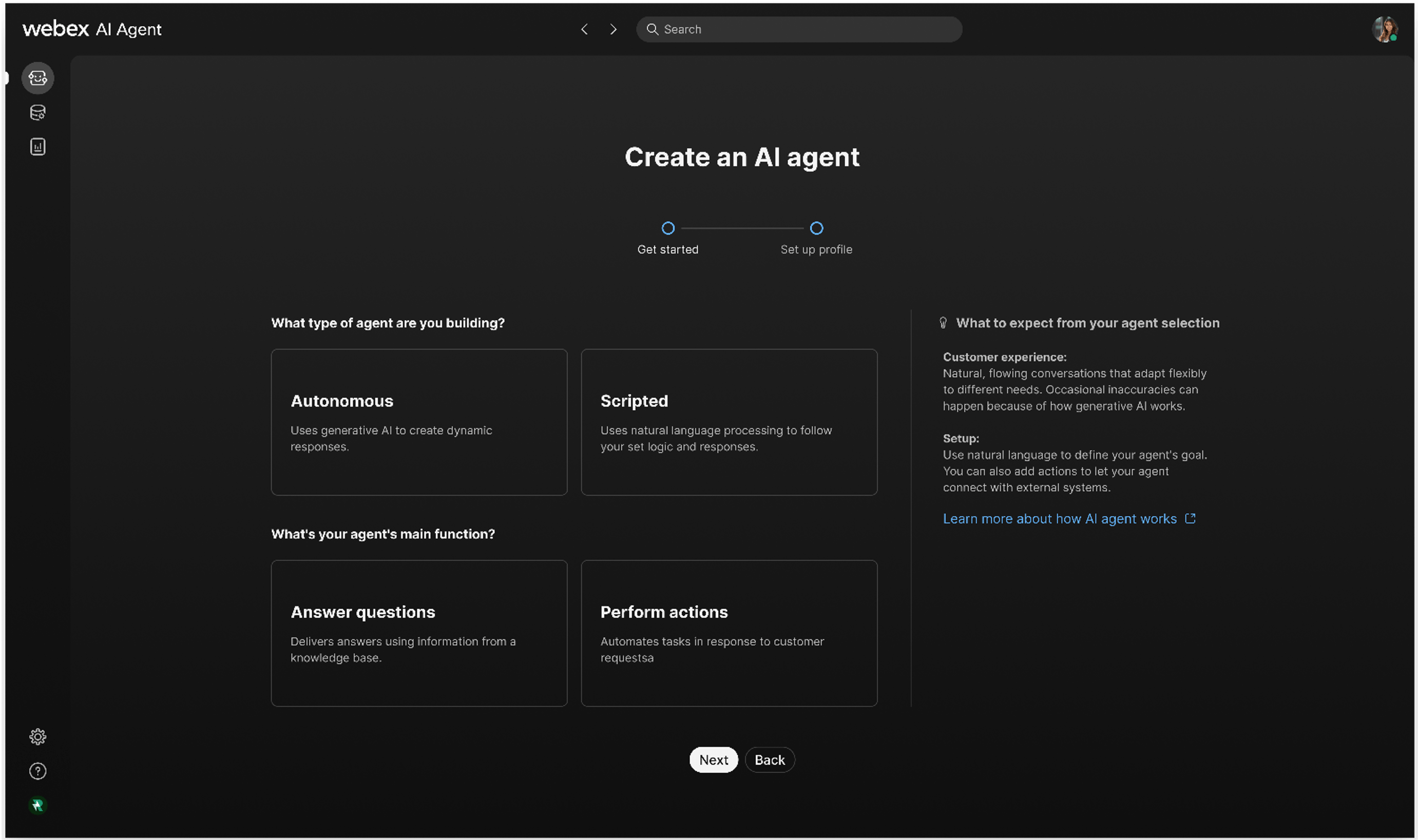
The new autonomous Webex AI agent can handle natural language-based customer service interactions and integrate seamlessly with back-office systems. The Webex AI agent studio empowers users to build and deploy custom AI agents. This involves selecting pre-built agents, defining their primary functions, and integrating them with business systems. The AI agent can handle both voice and chat interactions, take proactive actions, and deliver personalized service.
The AI agent prioritizes delivering a seamless, human-like customer experience without any wait times. To achieve this, it focuses on three key objectives: instant issue resolution, increased containment rates, and reduced average handle times. This omnichannel and multimodal AI agent can interact with customers through their preferred channels and modes, including photo sharing. It is seamlessly integrated with contact center products, starting with Webex Contact Center and expanding to enterprise Webex products and direct device customers soon.
Beyond initial interactions, the AI agent is designed to execute actions and deliver desired outcomes throughout the entire customer journey. Leveraging generative AI, these agents can autonomously handle complex queries and tasks. Scripted models are also available for organizations preferring a more controlled approach. To cater to a global audience, the AI agent supports eight languages.
Cisco also announced enhancements to the Webex AI assistant, including the ability to identify individuals in conference rooms and generate meeting summaries in multiple languages. The AI assistant's accessibility on various devices and its integration with audience engagement tools like Vidcast and Slide have been improved. The AI assistant's capacity to take action, integrate with enterprise systems, and provide content summaries in other productivity tools is highlighted. The AI assistant will be available as an add-on in early 2025 as part of the Webex customer experience solution.
Cisco's Devices: Delivering Immersive Collaboration Experiences
Cisco is driving innovation in collaboration technology by introducing cutting-edge devices, including spatial meetings for Apple Vision Pro and a new ceiling microphone. These devices are designed to elevate audio and visual experiences, making remote meetings feel as natural as in-person interactions. Cisco's commitment to interoperability is evident in its partnership with Microsoft Teams, where it has emerged as the fastest-growing partner.
Central to Cisco's vision is the concept of "Distance Zero," which aims to bridge the gap between remote and in-person meetings. By leveraging AI and spatial audio, Cisco creates immersive and lifelike collaboration experiences. Spatial audio delivers a more realistic audio experience, making remote participants feel like they are in the same room. AI-powered video enhances video quality, automatically adjusting for lighting and background noise.
Cisco's partnership with Apple is a significant step toward realizing the Distance Zero vision. By combining Cisco's powerful collaboration tools with the capabilities of Apple Vision Pro, Cisco aims to revolutionize remote work. Spatial meetings in Webex for Apple Vision Pro promise to create immersive, lifelike virtual conference rooms. This groundbreaking technology, powered by spatial computing, enhances remote interactions and fosters a more collaborative work environment.
Through this partnership, Cisco is shaping the future of work and communication. Users can participate in lifelike meetings with virtual presence and realistic audio, collaborate on shared documents and projects in virtual environments, and seamlessly access and share information, such as presentations and whiteboards, in a virtual setting. Cisco's commitment to innovation, coupled with the power of AI, spatial audio, and virtual reality, drives the future of immersive collaboration.
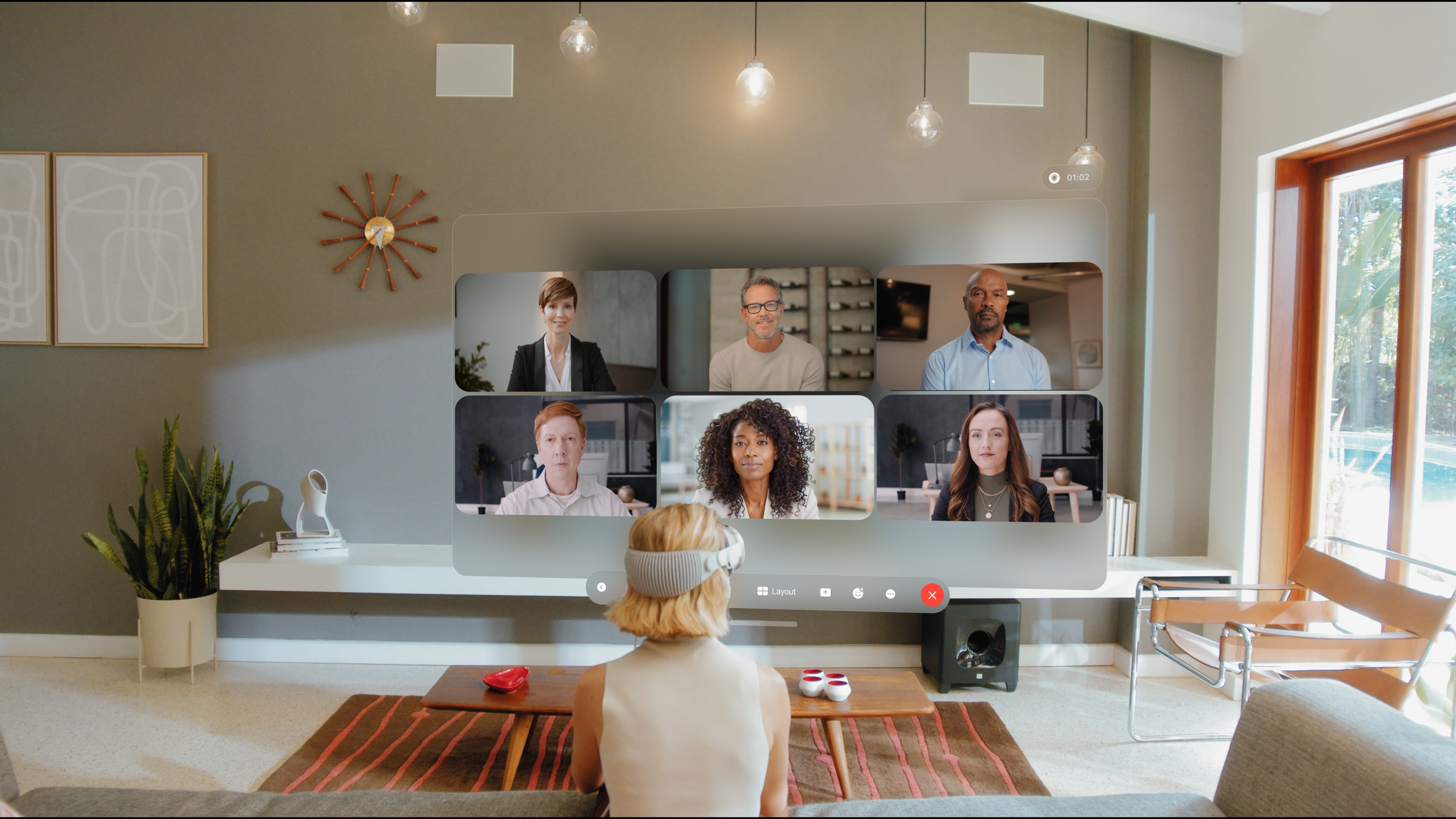
Spatial meetings' potential applications extend beyond the traditional office setting. Industries such as education, healthcare, and retail can benefit immensely from this technology. For instance, students can engage in immersive learning experiences, healthcare professionals can collaborate seamlessly on complex cases, and retailers can provide innovative virtual shopping experiences.
To further optimize collaboration spaces, Cisco has introduced Workspace Designer, a powerful tool that enables organizations to design and visualize optimal equipment placement and microphone coverage. Users can generate detailed blueprints by inputting room dimensions, making it a valuable asset for IT teams.
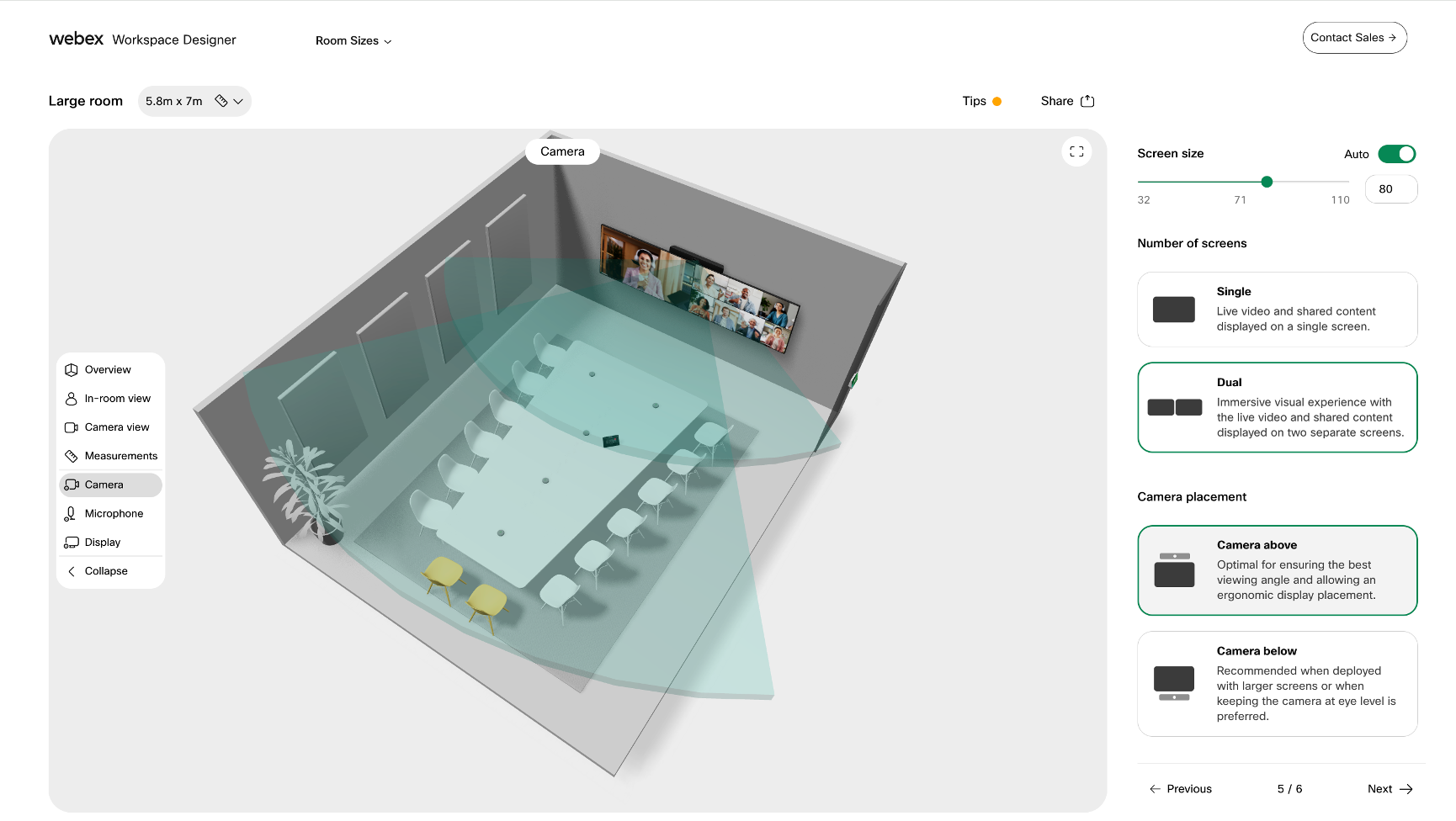
Cisco's commitment to simplifying workplace management is evident in the introduction of Smart Diagnostics in Control Hub. This AI-powered feature proactively identifies and resolves device issues, reducing downtime and improving overall device performance.
Interoperability is a crucial factor in today’s diverse technological landscape. Cisco recognizes the importance of seamlessly integrating its devices with collaboration platforms like Microsoft Teams. By prioritizing interoperability, Cisco empowers organizations to create flexible and adaptable workspaces. Furthermore, Cisco’s integration of devices with Cisco Spaces enables smarter workplace management. This powerful combination allows organizations to optimize physical spaces and enhance employee experience.
The Cisco Ceiling Microphone Pro is a cutting-edge audio solution designed to elevate the sound quality of video conferences in medium to large conference rooms. Its AI-powered beamforming technology intelligently focuses on active speakers, minimizing background noise and capturing crystal-clear audio. The Ceiling Microphone Pro offers a unified and user-friendly experience by seamlessly integrating with Cisco's video conferencing systems. Its scalable and flexible design allows for easy deployment in diverse room configurations, making it suitable for various applications. This AI-powered microphone leverages adaptive technology to adjust to room acoustics, ensuring crystal-clear audio capture automatically. The user-friendly setup process further simplifies installation and minimizes disruption.

Final Techaisle Take
WebexOne 2024 was a testament to Cisco's dedication to pushing the boundaries of collaboration technology. With a focus on AI integration, innovative devices, and a commitment to sustainability, Cisco is well-positioned to lead the future of work. As we look ahead, it's clear that the innovations unveiled at WebexOne will play a crucial role in shaping how we collaborate and communicate.
Cisco's device-led and platform strategy is a crucial driver of its competitive edge in collaboration. By offering a comprehensive suite of hardware and software solutions, Cisco empowers organizations to create seamless and efficient workspaces. This integrated approach ensures that devices work seamlessly together, delivering a superior user experience.
A device-led and platform strategy is a winning formula for several reasons. First, it allows for greater control over the user experience, ensuring that hardware and software are optimized to work together. Second, it enables faster innovation and quicker time to market for new features and capabilities. Finally, it fosters a more robust ecosystem of partners and developers, leading to increased customization and flexibility.
Webex offers a compelling solution for businesses of all sizes. By leveraging Cisco's innovative technology and robust platform, organizations can enhance productivity, improve collaboration, and drive business growth. Whether remote work, hybrid work, or in-person collaboration, Webex provides the tools and features needed to succeed in today's dynamic business environment.