• TRUSTED RESEARCH

    TRUSTED RESEARCH | STRATEGIC INSIGHT

    SMB. CORE MIDMARKET. UPPER MIDMARKET. ECOSYSTEM
    LEARN MORE
  • INTERWORK 2.0: THE AGENTIC FUTURE OF CONNECTED BUSINESS

    INTERWORK 2.0: THE AGENTIC FUTURE OF CONNECTED BUSINESS

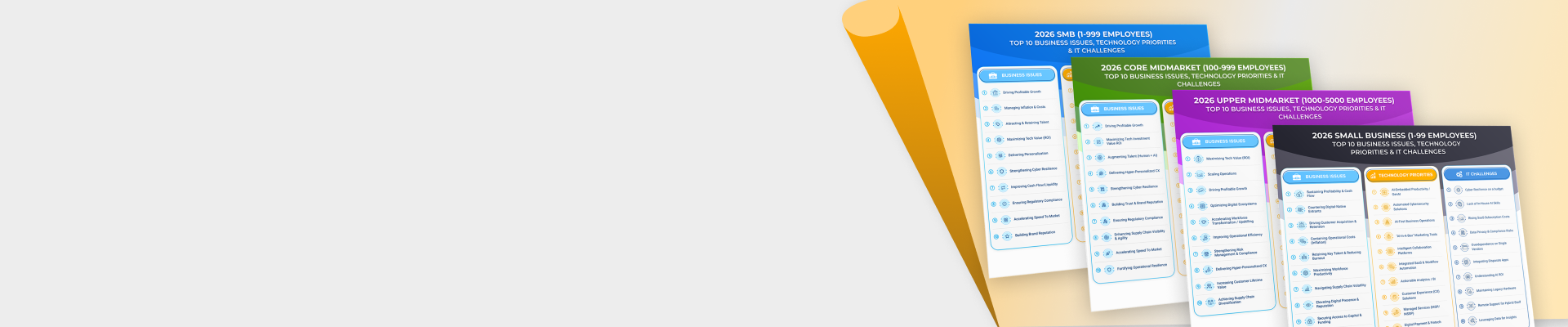
  • 2026 TOP 10 SMB BUSINESS ISSUES, IT PRIORITIES, IT CHALLENGES

    2026 TOP 10 SMB BUSINESS ISSUES, IT PRIORITIES, IT CHALLENGES

  • 2026 TOP 10 SMB PREDICTIONS

    2026 TOP 10 SMB PREDICTIONS

    SMB & Midmarket: Autonomous Business
    READ
  • 2026 TOP 10 PARTNER PREDICTIONS

    2026 TOP 10 PARTNER PREDICTIONS

    Partner & Ecosystem: Next Horizon
    READ
  • ARTIFICIAL INTELLIGENCE

    ARTIFICIAL INTELLIGENCE

    SMB & Midmarket Analytics & Artificial Intelligence Adoption
    LEARN MORE
  • IT SECURITY TRENDS

    IT SECURITY TRENDS

    SMB & Midmarket Security Adoption Trends
    LATEST RESEARCH
  • BUYERS JOURNEY

    BUYERS JOURNEY

    Technology Buyer Persona Research
    LEARN MORE
  • PARTNER ECOSYSTEM

    PARTNER ECOSYSTEM

    Global Channel Partner Trends
    LATEST RESEARCH
  • CLOUD ADOPTION TRENDS

    CLOUD ADOPTION TRENDS

    SMB & Midmarket Cloud Adoption
    LATEST RESEARCH
  • FUTURE OF PARTNER ECOSYSTEM

    FUTURE OF PARTNER ECOSYSTEM

    Networked, Engaged, Extended, Hybrid
    DOWNLOAD NOW
  • MANAGED SERVICES RESEARCH

    MANAGED SERVICES RESEARCH

    SMB & Midmarket Managed Services Adoption
    LEARN MORE

Techaisle Analyst Insights

Trusted research and strategic insight decoding SMBs, the Midmarket, and the Partner Ecosystem.
Anurag Agrawal

Lenovo ThinkBook Plus Gen 3 is a phenomenal multitasking notebook for the discerning SMB user

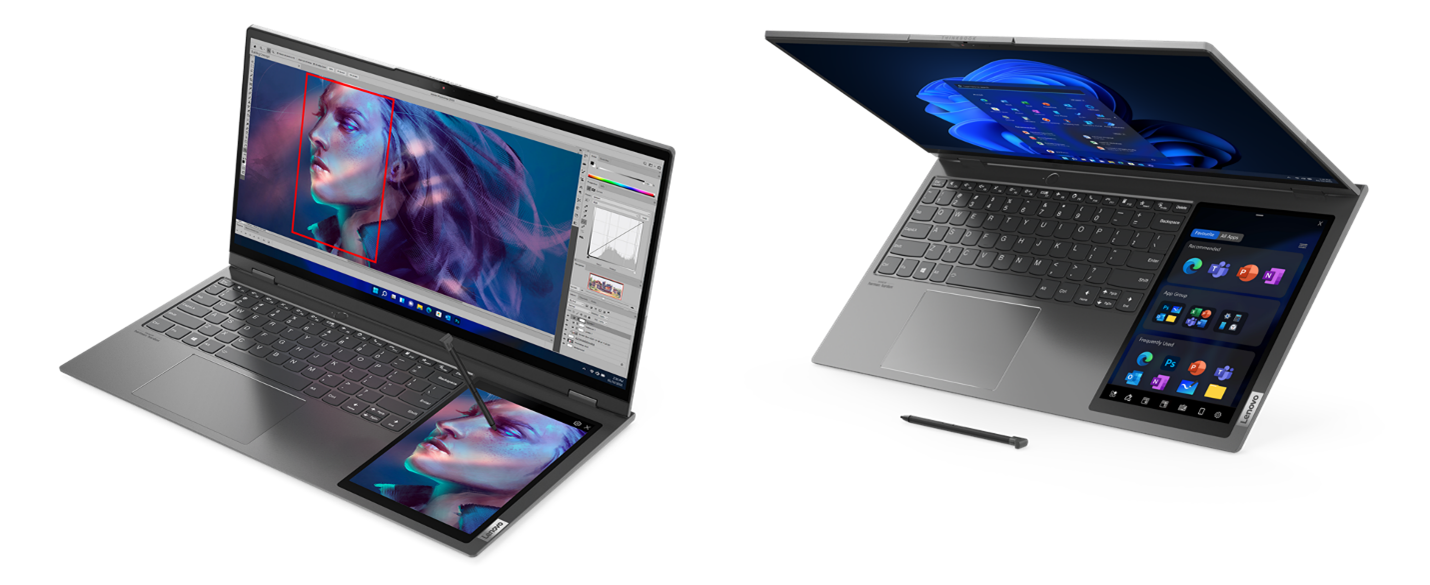
Occasionally there comes along a compelling, impressive, persuasive, and differentiated notebook design that astonishes you. Lenovo ThinkBook Plus Gen 3 is that design. The new Lenovo ThinkBook Plus Gen 3 has a 17.3-inch ultrawide 3K display AND an additional 8-inch color display beside the keyboard. It is built for multitasking. And I love it.

I first fiddled with Thinkbook Plus in November 2019. The notebook gripped my attention because of its “Think” pedigree, focus on the SMB segment, and unexpected E-Ink screen on the lid. It was an intriguing design. Fast forward two years to September 2022. The innovation difference between the Gen 1 and Gen 3 has been nothing but exponential. I distinctly remember quizzing engineers during analyst council sessions with many PC OEMs about a notebook with multiple or extensible screens. Two models with dual screens have been introduced, and Lenovo ThinkBook Plus Gen 3 is far better than its competitor.

techaisle lenovo thinkbook plus gen3 image

I have been using a fully configured (1 TB SSD, 12th Gen Intel core i7-12700H processor, 32 GB memory, a fingerprint scanner on the power button, TPM 2.0) production model for most of the last month. It is an innovative and practical notebook that exudes the quiet confidence of imaginative applied design. When I powered on the notebook, my synapses fired on all cylinders. Lenovo still has one of the cleanest setups and installs of any PC OEM. Lenovo Vantage is one of the best apps to personalize device settings, update drivers and software and manage security configurations.

Dual displays are more productive than one

The touchscreen 17.3-inch main display of the ThinkBook Plus Gen 3 is ultrawide and has a resolution of 3072 x 1440 with an aspect ratio of 21:10 and 400 nits brightness. The ultrawide display in a laptop makes multitasking more accessible and allows users to see more content with less distraction. The massive and roomy display is a visual treat, a productivity enhancer, and ideal for Windows 11 snap layout. Straddling the line between business, work, and life, ThinkBook boasts Dolby Vision for lifelike images, blue light reduction, and 2 X 2W Harman Kardon audio for superior sound. The Lenovo Integrated Pen is a bonus for the secondary display. There is a built-in pen garage in the right corner of the chassis rear. I found the pen responsive on the 8-inch display when using Microsoft OneNote. I have extensively used the secondary 800 x 1280 multitouch LCD display for email, note taking, meeting calendar, WhatsApp desktop, skype, web browsing, file explorer, and Teams chat. Its 10:16 aspect ratio works very well, in my experience. It is one of the best examples of multitasking. Although the screen resolution is not the best, it is very productive to have an additional display. The high point is that I can drag and drop most applications and snap windows from the main to the secondary display and vice versa. I have effectively used the screen to glance at my talking points during presentations. The two screens combined optimize my productivity. The backlit keyboard is helpful.

Anurag Agrawal

Cisco Meraki masterfully enabling digital workplaces for SMBs

New work patterns and the acceleration of distributed workplaces are resulting in a range of productivity benefits for SMBs today. As such, businesses see increased workforce efficiencies and talent recruitment while minimizing cost by reducing intermediaries and integrating contract professionals – and even improved environmental performance through reduced commuting and building footprints.

In the quest to deploy a perfect hybrid workplace technology infrastructure, SMBs often overlook networking – wireless, routers, firewalls, and beyond. Similarly, as small business retailers and other small commercial offices struggle with re-opening uncertainties, they also grapple with the daunting task of enabling secure and safe environments for their employees and customers. Digitization with minimum IT disruption and low manageability is on their minds.

Cash flow constraints, limited access to finances, competitive landscapes, the need for innovation, erratic revenue, uncertainties, the pace of technology change, and many more are drivers for achieving cost efficiencies within SMBs. Digital transformation is no longer the domain of only upper midmarket firms and enterprises. Techaisle's SMB and Midmarket Digital transformation survey research shows that 46% of SMBs are adopting digital transformation to reduce costs, and 38% are planning for innovation in customer engagement and services.

Helping SMBs thrive with robust IT solutions

Unbeknownst to many, the Cisco Meraki platform and the solutions it powers is a critical foundational technology to fast-forward digital transformation for SMBs. Much of this comes from its ease of use, simplicity, and flexibility for lean IT to innovate by doing more with less.

Cisco acquired Meraki in 2012, around the same time (2013), when it divested Linksys to Belkin. Over the years, Cisco has continued to innovate on its highly successful Meraki platform. It is no secret that Cisco Meraki invented cloud-managed networking technology in 2006. It has continued to innovate and expand the networking portfolio to IoT solutions and cover any business need or use case. The Meraki platform consists of switching, security & SD-WAN, wireless access points, mobile device management, and extending to IoT, including smart cameras and AI-equipped sensors to drive business intelligence.

Regarding deep intelligence and analytics, Meraki Health and Meraki Insight allow SMBs to monitor all aspects of their network and applications from the Meraki dashboard or API and easily detect and fix potential issues in minutes. Techaisle's survey shows that only 4% of small businesses have internal full-time IT staff. They spend 79% of their time on support, maintenance, and troubleshooting— creating an IT efficiency deficit and negatively impacting organizational productivity. Meraki Health's objective is to simplify troubleshooting for the lean, almost non-existent, or over-burdened small business owner/manager. Small businesses need to propel growth and enable new business initiatives freeing up time and resources. To ease the digital transformation, Meraki provides many capabilities that protect SMBs of any size, including:

  • Preventing cyber-attacks: Meraki MX Security & SD-WAN appliances protect SMB businesses, users, and devices. Meraki security has the backing of Cisco Talos, one of the largest commercial threat intelligence teams globally.
  • Deploying remote workers: Meraki Z3 teleworker gateways provide connectivity and secure and seamless in-office experiences. Meraki Insight delivers deep visibility into critical business applications and proactive troubleshooting for remote workers.
  • Ensuring safe occupancy: Meraki MV smart cameras let SMBs maintain social distancing guidelines by remotely monitoring and tracking safe occupancy levels in physical environments through intelligent analytics, such as object detection and tracking.
  • Cost savings from simplicity: All Meraki products are deployed and controlled from a single pane of glass. Meraki Health is available for all devices, saving many troubleshooting times by pinpointing specific problematic devices and clients via root cause analysis.

SMBs agree that Meraki solutions can be quickly deployed with zero-touch provisioning and configuration and remotely managed through a cloud-based GUI dashboard (single pane of glass), with all-inclusive licensing. Meraki provides 24/7 technical support (email or phone) and a lifetime warranty on devices (except cameras & outdoor APs) with advanced replacement.

Challenges in small business security

Techaisle's SMB security survey research data shows that security is a top IT priority and challenge for 76% of SMBs, and 65% are planning to increase IT security investments. Within the SMB segment, small businesses often lack the skills required to work with software-based security solutions and are 25%-33% less likely than midmarket firms to work with managed service providers.

Most small businesses are not proactive in addressing security issues, but that may not be the whole problem or perhaps even the greatest obstacle to small businesses’ adoption of security technology. Relative to midmarket firms, small businesses have limited to no internal IT security staff, are not generally working with a managed service provider capable of handling security needs, and are about 50% less likely to embrace external vendors' software-based security solutions.

While small businesses could theoretically pursue some strategies used by larger competitors, they lack the experience and skills to identify, deploy, and manage the products and relationships used to develop shields protecting valuable corporate data, applications, and human assets.

Meraki addresses these issues by providing a secure in-office experience to remote workers—giving access to applications while maintaining visibility and control from anywhere with a cloud-managed dashboard. It also encrypts data with Auto VPN, allowing employees to quickly, securely, and remotely connect to corporate locations.

Meraki smart cameras also address physical security, remote monitoring, and intelligence by including on-device storage and flexibility to access data through the cloud. The cameras allow for many playback features with machine learning and AI to compress the data and provide business intelligence instantly gleaned from long recordings. It is an ideal product for SMBs implementing social distancing guidelines, remotely monitoring physical spaces, reducing in-person exposure on-site, and ensuring comprehensive security.

How SMBs can adapt and digitize

As I said earlier, there is increasing importance for innovation and digitization (not referring strictly to the substitution of digital records for physical documents, but more broadly to the use of digital technologies to meet business goals) in SMB strategy. Dependence on technology as a critical element of business success, burgeoning complexity, and cost constraint has created a perfect storm for small businesses to adapt to changing environments using specifically designed technology.

Over the last few months, we studied use cases and Meraki's usefulness within the SMB segment. Meraki addresses real and compelling issues, and I believe it will continue to expand within the SMB community. Verticals such as healthcare, manufacturing, retail, and financial services have been quick adopters of Meraki, specifically for launching new business models, deploying remote workers, transitioning to hybrid workplaces, cybersecurity, location analysis, contact tracing, social distancing, personal safety, curbside pickup, and more.

SMB owners and executives are concerned with issues that extend beyond technology. Yet, today's business environments are increasingly dependent on IT support, products, and services that improve productivity and efficiency or expand market reach and potential.

Final Techaisle Take

IT initiatives that can be linked meaningfully to broader business objectives can attract SMB executive support – meaning that products and services that address key business priorities have the most significant growth potential. Meraki is well on its way.

Today's economy demands that technology support SMB activities. The future will be defined by them capitalizing on technology-enabled business options. If SMBs are thinking about the path forward, from today's foundation to tomorrow's opportunity, they should include Meraki in their evaluations. Writing this analysis reminds me that I work from home and should probably replace my mesh routers with Meraki devices.

Anurag Agrawal

Mitel evolves its UC growth strategy and gains momentum with RingCentral UCaaS

Mitel’s overall philosophy for unified communications (UC) is enabling customers with broad flexibility to deploy what they want and purchase solutions how they want. A key differentiator of Mitel’s has been its belief that one size does not fit all. That belief is supported by a recent Techaisle global study revealing that 44% of firms use multiple communication platforms. On-prem unified UC solutions dominate in 88% of firms, but in 56% on-prem capabilities co-exist with cloud solutions. All these options are choices that Mitel supports with its Customer Lifecycle Management approach, recently bolstered by its exclusive UCaaS partnership with RingCentral.

Mitel - RingCentral UCaaS momentum - “A Differentiated and Evolved Partnership”

Mitel is not just partnering with RingCentral but doing even more by optimizing the complete migration experience through collaborative processes, migration tooling, device transfers, and exclusive incentives providing Mitel customers a world-class UCaaS solution and a clear, flexible path toward the future. Mitel is actively integrating numerous capabilities with the RingCentral MVP (Messaging, Voice, Phone) platform to enhance the whole experience for customers. The first example of this broad integration was evident just five months following the RingCentral partnership when Mitel launched its first set of certified devices – the 6900 series phones – which work seamlessly with RingCentral MVP. Customer choice and experience extend into a well-thought-through onboarding process, enhanced by Mitel’s Migration Assist Package, which introduces automation and accuracy while migrating customers 75% faster than industry standards. Customers migrating to less than a hundred seats can take advantage of these free implementation services. The free service is very generous as it includes access to an Implementation Advisor who also schedules discovery and training sessions and unlimited access via toll-free number for follow-up questions and assistance on system setup. Mitel partners or RingCentral provide professional services for customers with more than a hundred seats.

Mitel’s partnership with RingCentral has seen significant momentum, migrating over 100,000 seats in the first six months of the exclusive relationship.

The RingCentral – Mitel partnership is highly differentiated from others in the market, including RingCentral’s relationship with Avaya. From the outset, Mitel has distinguished itself from Avaya and others with superior pricing and purchase flexibility, ease of deployment and migration, professional services, and training. Although Avaya is widely considered to have a composable CPaaS offering, Mitel’s CloudLink technology with APIs and integration capabilities are yet to be fully utilized by developers and partners. Additionally, the compensation received from RingCentral fuels investments in core Mitel unified communications R&D and innovation and potential future merger and acquisition activities.

Anurag Agrawal

SMBs Make Cloud Calling and Collaboration a Priority – Webex Gets it

Historically, remote work solutions have been the domain of large enterprises equipped with processes and technology resources needed to support workers in the field. However, driven by short- and longer-term factors, flexible work options are now available to employees in businesses of all sizes. Moreover, as social distance health requirements forced the temporary closure of public office spaces, remote work became a matter of survival for many organizations. The pandemic has also crystalized recognition of the productivity benefits of technology-enabled remote work – measured in output rather than hours – which is sure to have a profound and durable impact on workplace behaviors. Today, working from anywhere is the new normal, enabled by powerful communication and collaboration tools, which draw together workers regardless of physical location and are becoming the catalyst for change in large and smaller businesses. What are the primary enablers of this flexible work trend? Data shows a growing commitment to leveraging the power of the cloud and adjacent technologies of mobility, cloud calling, and collaboration - technologies that allow workers and teams to connect, reflect, and share insights and output. Techaisle SMB and Midmarket Hybrid work and collaboration adoption survey, N=1810, shows that:

  • 93% of SMBs have prioritized remote and hybrid workplace technology solution adoption
  • 58% of employees in the SMB segment are likely to work remotely
  • 79% of SMBs are prioritizing cloud-based communication and collaboration solutions which show evolving recognition of the value of cloud calling and collaboration

The simultaneous commitment to cloud calling and collaboration solutions and future planning around a return to the office suggest that something deeper is at play in the SMB communications solution marketplace. Cloud calling and Collaboration are central components of virtually all SMB business activities. The need to communicate anywhere, anytime also means any type of communication and collaboration – synchronous/asynchronous, serendipitous/scheduled, on-the-go/fixed location, within a virtual workspace/within a specific app, with employees/partners/customers. As the lines of demarcation between tasks have been eroded by the increased pace and changing nature of business activities, SMBs have moved past linking discrete actions through linear, sequential processes. Instead, in today's business environment, SMBs interact at all points in the business cycle: in cross-functional planning and management, within a single co-created document, in the stages and connection points defined by their business processes, in delivering better customer experiences, and enabling improved employee productivity.

There is value in adopting unified cloud calling and collaboration. The use of traditional collaboration tools by SMBs is well-established. However, cloud calling solutions are rapidly gaining attention from SMBs. With nearly a hundred percent cloud priority, shifting from on-prem solutions (acquired through CAPEX budget) to cloud-based as-a-service offerings creates a sort of inflection point. As the name implies, cloud calling is cloud-based and available as a subscription. It supports remote work and mobility, provides cash flow predictability, easily integrates within the employees' workspace, and improves IT manageability and efficiency.

A significant collaboration technology shift is SMB's use of a cloud-based communications platform with integrated telephony (audio/video/web conferencing), IM/chat/presence, unified messaging, and mobility. Techaisle data shows that today, just under a third (27%) of SMBs are using integrated solutions, while over a third (35%) plan to adopt the platform in the coming year, a likely adoption growth of over 100%.

The Webex integrated collaboration platform

Trusted Research | Strategic Insight

Techaisle - TA